The room journal
Reupholstering bar stools: decide what the retained frame is worth
Reupholstering a commercial bar stool can preserve a familiar frame and change the surface guests see and use. It can also become an expensive detour if the frame, mechanism, or seat support needs work that the upholstery estimate does not include. Start with the condition and construction of the whole stool before choosing a new material.
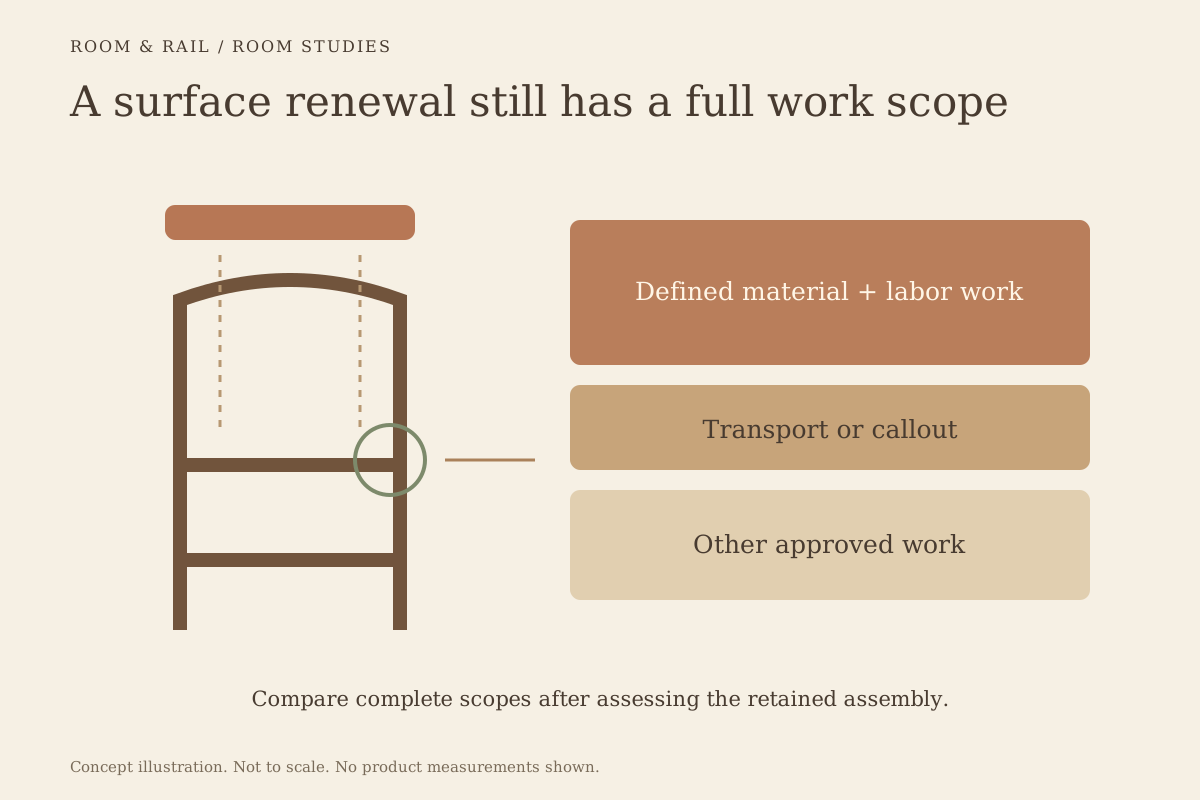
The decision is usually more useful when framed as a defined scope: renew this approved seat or back on these identified stools, with these parts and this work. That is different from a general wish to refresh the bar. A clear scope makes the visual result, practical disruption, and cost easier to compare with new furniture.
Open diagram at full size (new tab) ↗
Assess the frame before treating upholstery as the problem
A worn seat cover and a loose frame are different concerns. The first may lead to an approved upholstery or seat-replacement option; the second needs an appropriate condition assessment. New fabric should not conceal a problem that remains beneath it.
Use the wear-review guide to distinguish surface change, component wear, and structural questions. Identify the stools individually if their conditions differ. A single damaged piece should not automatically define the scope for the entire row, nor should the best-looking frame stand in for all the others.
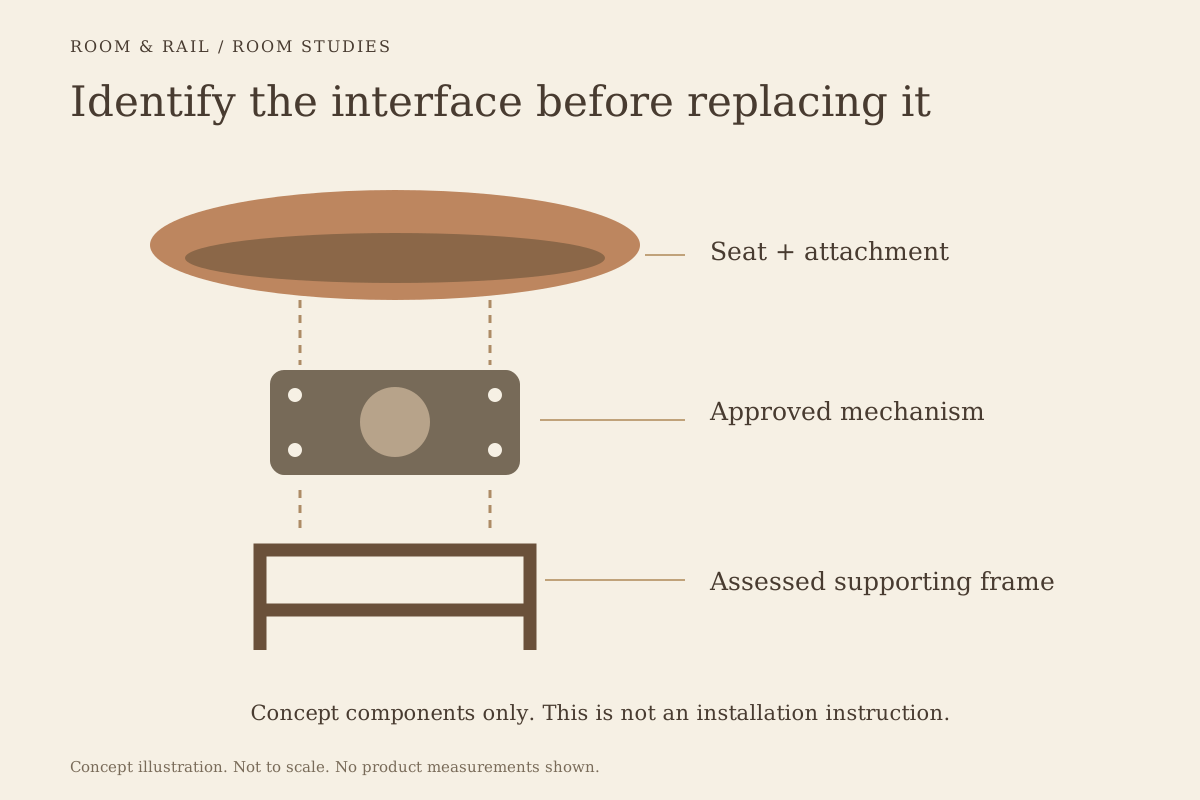
For swiveling models, the mechanism repair guide adds another assessment. Upholstery work does not establish that the swivel, its mounting, or the footrest is suitable to remain in service. Those items need their own approved review where a concern exists.
Determine whether the seat is replaced or recovered
A supplier may offer a complete compatible seat, while an upholstery service may propose recovering an existing component. These are different scopes. One can include a new substrate and padding; the other may retain some original parts, depending on the agreed work and product construction.
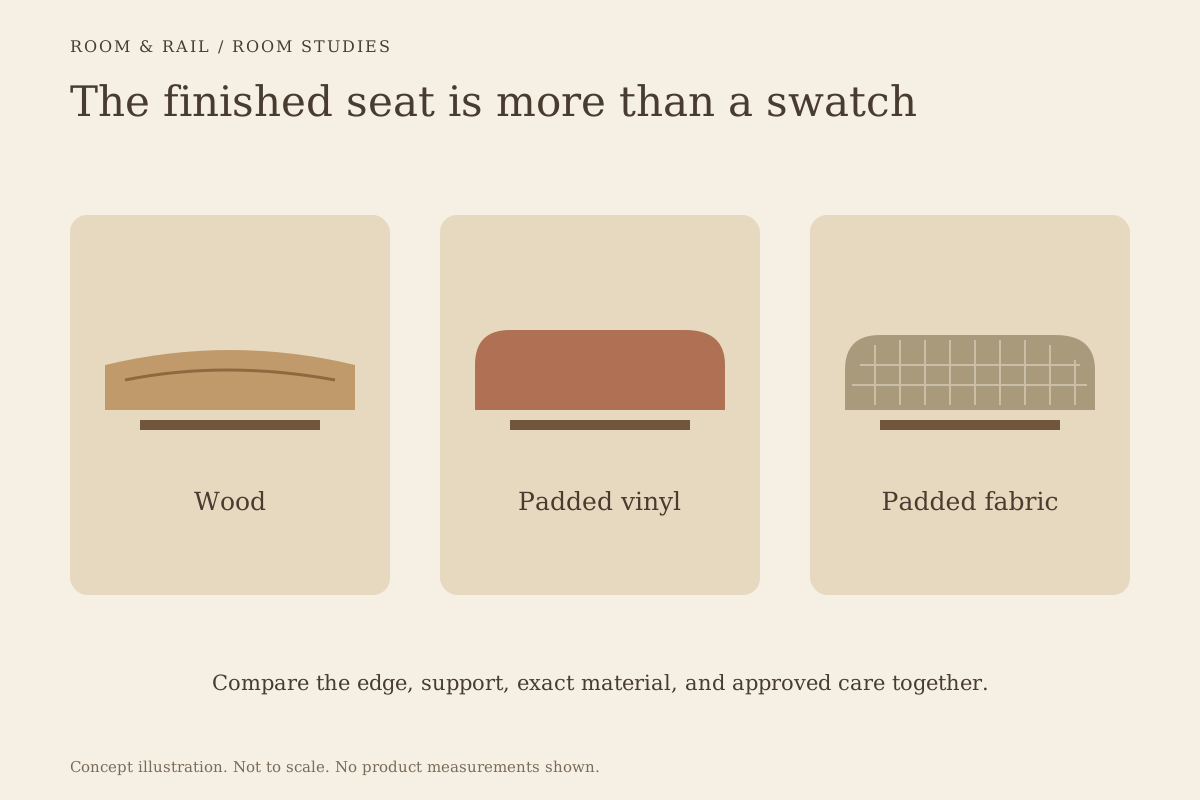
The FRU-110-BS stool offers padded vinyl and padded fabric choices when purchased as a configured product. That does not prove every existing version can accept any replacement seat or that a loose material can be fitted through an approved process. Confirm the actual model and attachment.
The replacement-seat guide explains why dimensions and mounting patterns matter. A seat that looks close in shape may still have a different fixing arrangement. Ask the supplier or qualified service provider to define exactly what will be retained, replaced, and inspected.
Include the back and edges in the visual scope
A new seat beside an older upholstered back can create a visible difference even if the material names appear similar. Light exposure, use, cleaning, and separate production batches can affect the comparison. Do not promise an exact match to aged upholstery from a name alone.
The FRU-US-225-BS stool offers several padded seat forms, including pullover versions. That illustrates why form belongs beside material in the brief. A changed edge or upholstery profile can alter the relationship between seat, frame, and counter even when the color remains close.
Use the finish-sample method to compare the proposed material with the actual retained furniture. Include the whole visible assembly, especially any upholstered back, piping, or exposed underside that will remain. The sample should answer a specific visual question before work begins.
Select the material for its intended service
The new upholstery needs its own documentation and care instructions. Replacing an old vinyl with another vinyl does not establish identical cleaning compatibility, and choosing a fabric with a higher abrasion figure does not prove a longer finished-seat lifespan.
The Association for Contract Textiles warns against converting abrasion results directly into service-life promises. Use the supplied evidence as part of the material review, together with construction and maintenance information. Avoid presenting a laboratory number as a guarantee of how long the recovered stool will remain attractive.
The seat-material guide considers wood, vinyl, and fabric as finished seating choices. Where a change in material or padding is proposed, confirm its suitability for the actual assembly and any project requirements. The upholstery work should follow an approved specification, not only a preferred color.
Build the estimate from named components
Request the material, labor, padding or substrate work, approved hardware, transport, and any minimum charge as applicable. Include removal and reinstatement if those tasks are part of the service. A per-seat figure may exclude costs that become meaningful for a small batch.
For a hypothetical example, twelve seats at an assumed $48 each for the defined upholstery work total $576. An assumed $90 collection-and-return charge brings that example to $666 before any other charges. These are invented calculation inputs, not a price offered by this site or a service estimate.
The example's purpose is to show scope, not savings. If two frames also need assessment or one seat substrate cannot be reused, the proposal changes. Ask for those conditions to be identified rather than hiding them inside a low average cost across all twelve stools.
Compare new furniture on the same basis
The October 17, 2026 catalog snapshot lists the FRU-110-BS at a $91 starting price. Twelve at that starting amount would total $1,092. Selected options, freight, tax, assembly, and other applicable charges are not established by that arithmetic, so it is not a confirmed delivered replacement total.
That starting subtotal should not be compared directly with the hypothetical $666 upholstery example as a proven saving. The inputs describe different scopes, and neither is a complete project offer. Obtain actual configured replacement pricing and an actual approved refurbishment estimate before choosing between them.
The buying guide keeps the order details and cost allowances visible. Also compare what each option delivers: retained frames with renewed surfaces, or new complete stools with the selected current configuration. A lower total is meaningful only when the restaurant understands those differences.
Plan the interruption and the return to service
Decide how many stools can be absent at once and where any temporary seating will come from. A phased refurbishment may preserve some service capacity but can add handling or transport tasks. A single batch may simplify the work while leaving the bar without its usual furniture for a period.
For bolt-down stools, coordinate any removal with the installation requirements. An upholstery job should not become an improvised change to the floor mounting. The approved work scope needs to identify who handles that assembly and how the completed furniture is reviewed.
Use the layout schedule guide to identify affected positions in your own room schedule. Keep the temporary arrangement subject to the same circulation and access review as the normal room. A short duration does not make an unsuitable seating layout acceptable.
Decide how much visual continuity to retain
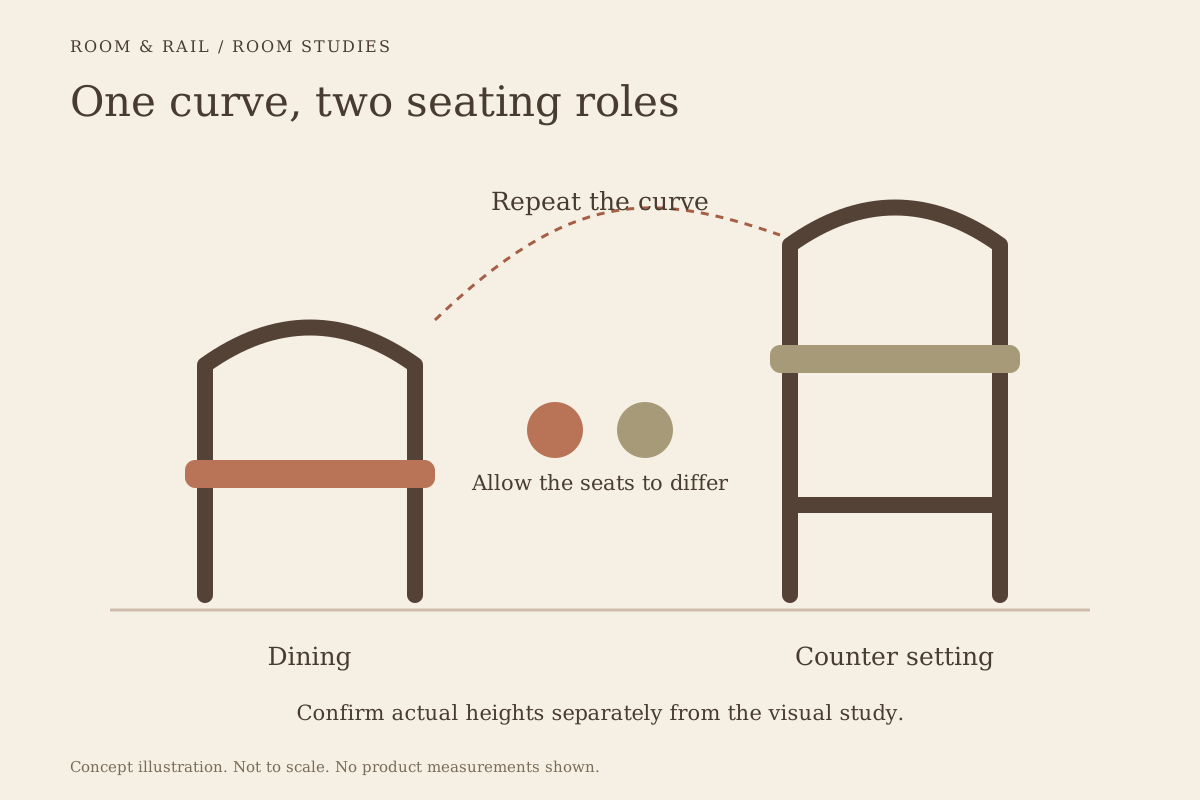
A refreshed row can keep the original frame tone while introducing a new seat color, or it can preserve the existing palette through a confirmed material choice. The chair-and-stool composition guide helps connect that decision to nearby dining furniture.
Save the approved configuration on the finish board, and retain the completed work details separately. The next buyer should be able to tell which parts are original, which were replaced, and which material reference now belongs to the stool. That clarity supports later care and purchasing.
Keep the frame only for a reason that survives the estimate
Reupholstery makes sense when the assessed assembly is suitable to retain, the work is approved and clearly priced, and the result serves the room's visual and practical needs. It is less convincing when it relies on an unverified frame condition or an assumed material match.
The choice should leave the restaurant with a defined furniture configuration and a defensible cost comparison. A familiar frame can be worth keeping, but familiarity alone is not the case for refurbishment. The whole stool, the scope of work, and the finished room need to support the decision together.