The room journal
Laminate or solid wood: compare the whole restaurant tabletop
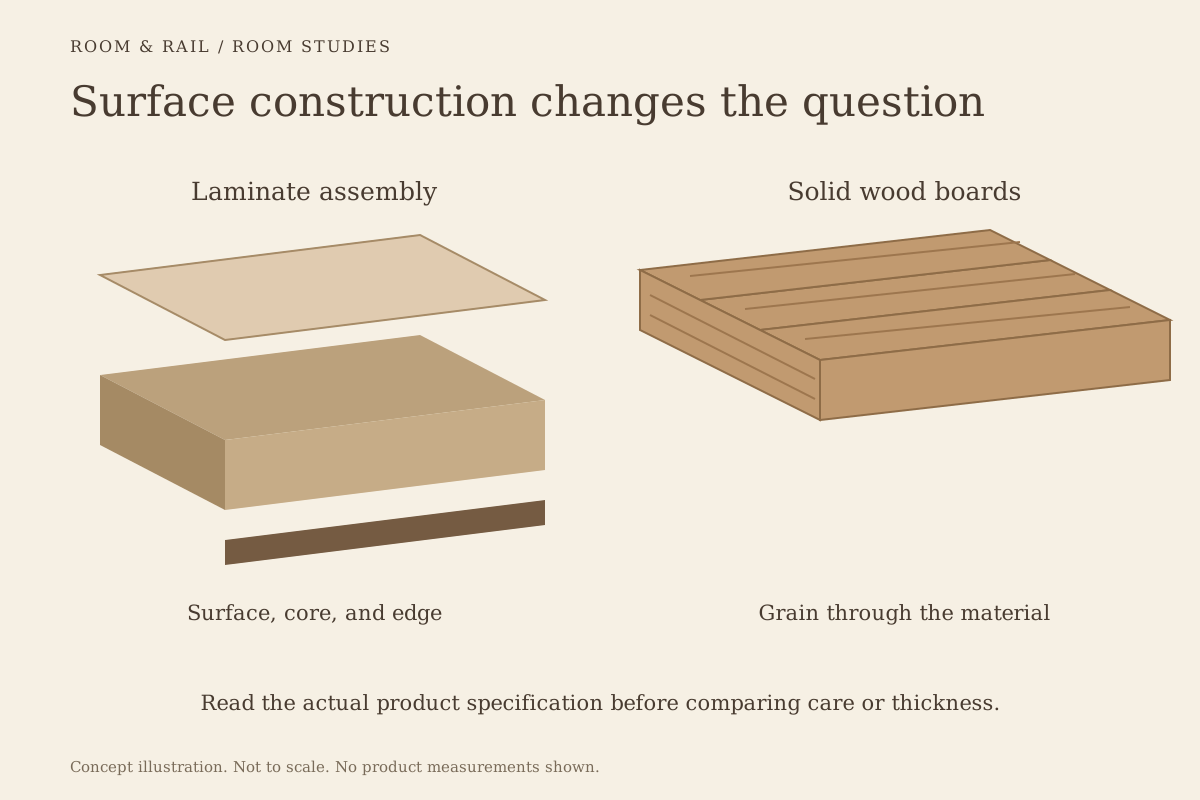
Laminate and solid wood table tops can produce a similar color palette while behaving as different constructions. One may place a decorative surface over a supporting core; the other presents the wood itself beneath its finish. That difference matters at the edge, mounting points, and cleaning routine as well as in the middle of the table.
Compare complete tops in the same proposed size and room position. A broad material preference is easier to assess when the buyer can see the actual edge, underside, finish, and base pairing. The goal is to choose a surface that suits the service and composition without turning either material into a universal winner.
Open diagram at full size (new tab) ↗
Identify what lies beneath the visible pattern
High-pressure laminate is a manufactured decorative sheet. Wilsonart describes it as constructed from resin-treated paper layers pressed together, with the supporting substrate treated as a separate part of the finished panel. That distinction explains why a laminate pattern does not identify the complete tabletop core.
A solid wood top has another structure, but its species, board arrangement, coating, and mounting still need to be identified. Solid Wood is a material category, not a complete description of the finished product. A stain named Walnut does not prove that the underlying wood is walnut.
The materials guide keeps those terms separate. Use it to distinguish a wood-look decorative pattern from actual wood and to retain the listed construction without adding assumptions about the core or finish. Similar appearance can be a design choice while the specifications remain different.
Compare two actual edge assemblies
The FRU-LAE-SFCH top is listed as laminate with an aluminum edge, indoor use, and a 1 1/4-inch tabletop thickness. The FRU-SW-BB butcher-block top is listed as solid wood for indoor use with a 1 1/2-inch thickness. Their edge constructions are visibly different parts of the selection.
Those thicknesses differ by 1/4 inch, but that does not establish a strength ranking or a complete height change in every assembly. The finished table also depends on its base and mounting. Compare the approved complete pairings rather than assuming a thicker top can be placed on any retained base.
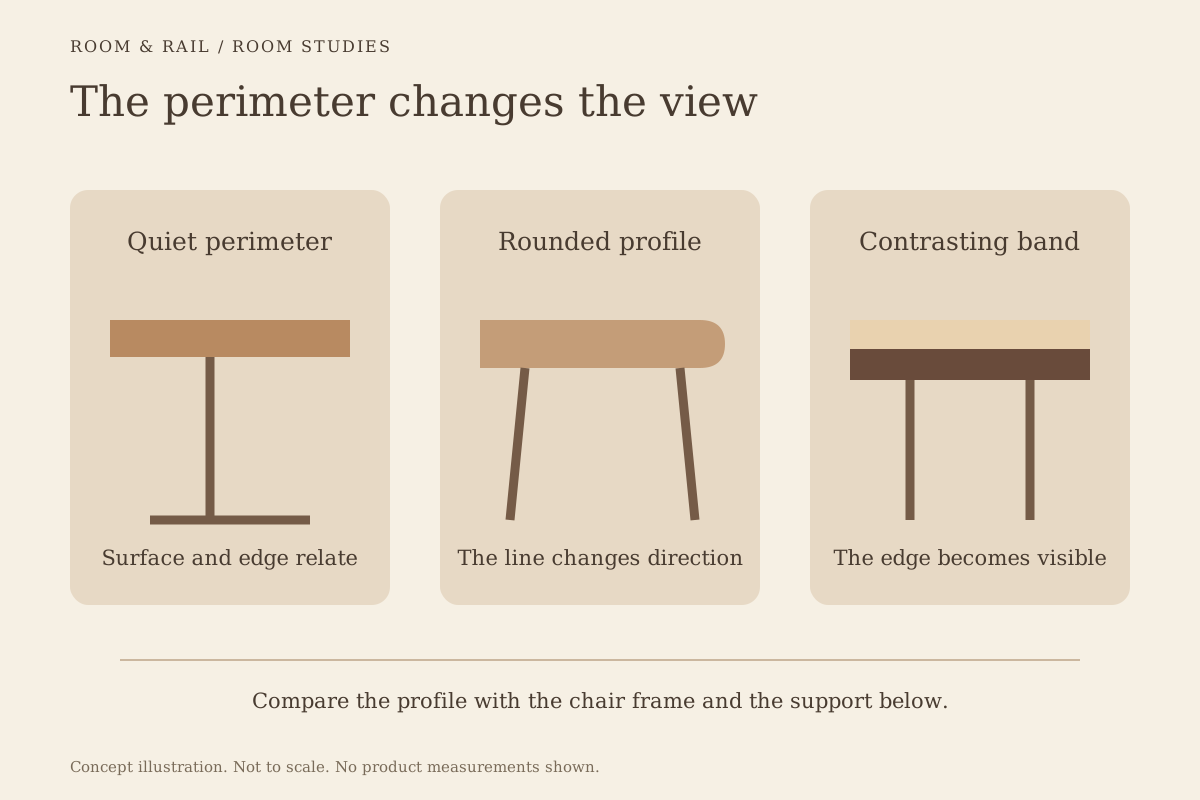
The table-edge article considers how the perimeter reads beside chair frames and upholstery. An aluminum band can introduce a contrasting line, while a wood edge may extend the surface's tone downward. The room can use either effect deliberately.
Read the pattern across a group of tables
A laminate decor can provide a particular visual pattern, but the sheet, finish texture, and cutting arrangement determine how it appears on each top. Review more than a tiny swatch when the design depends on large-scale grain or stone movement. The repeat may matter across a row of adjoining tables.
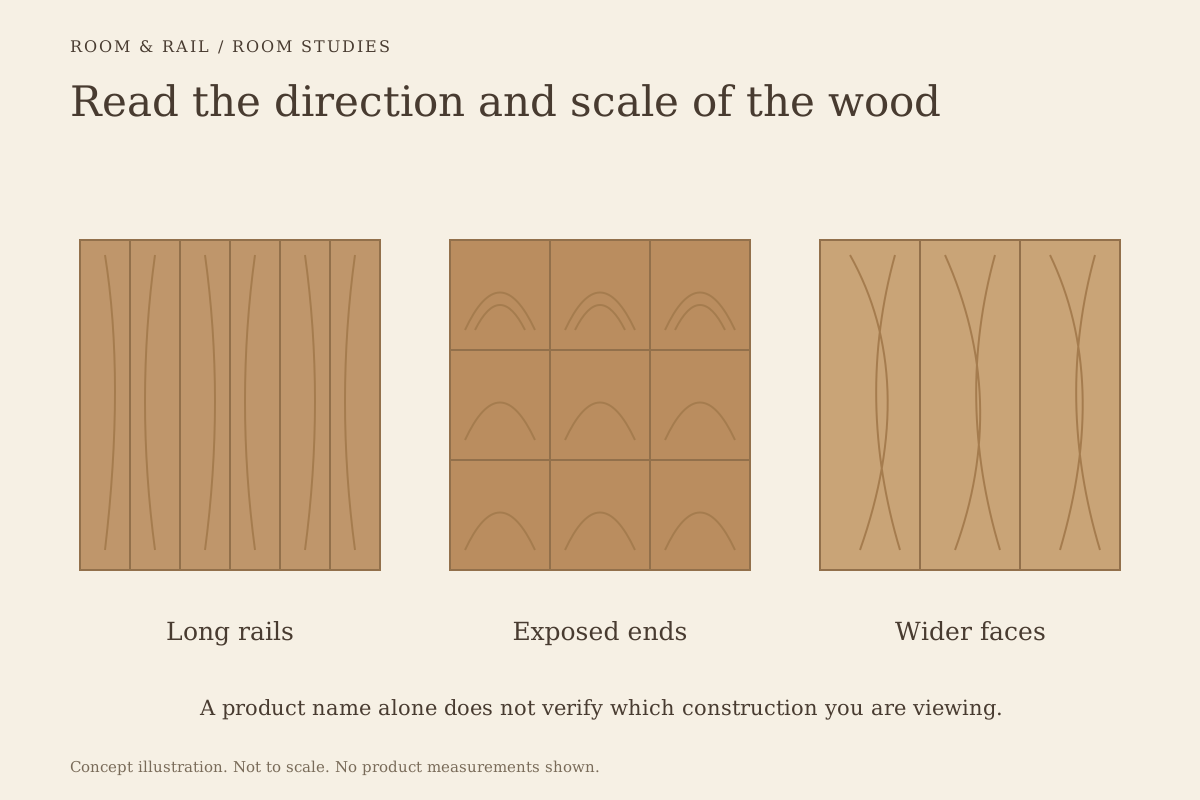
Solid wood introduces natural variation in grain and color between boards and pieces. The butcher-block construction guide separates narrow-rail, end-grain, and plank appearances. A small sample cannot promise the exact arrangement of every board in the finished room.
Use the finish-sample method to compare the proposed top with the actual chair and floor. Decide whether variation should lead the room or sit quietly behind other surfaces. The choice should follow that visual role rather than a generic association between wood and a particular restaurant type.
Compare daily care at the surface and the edge
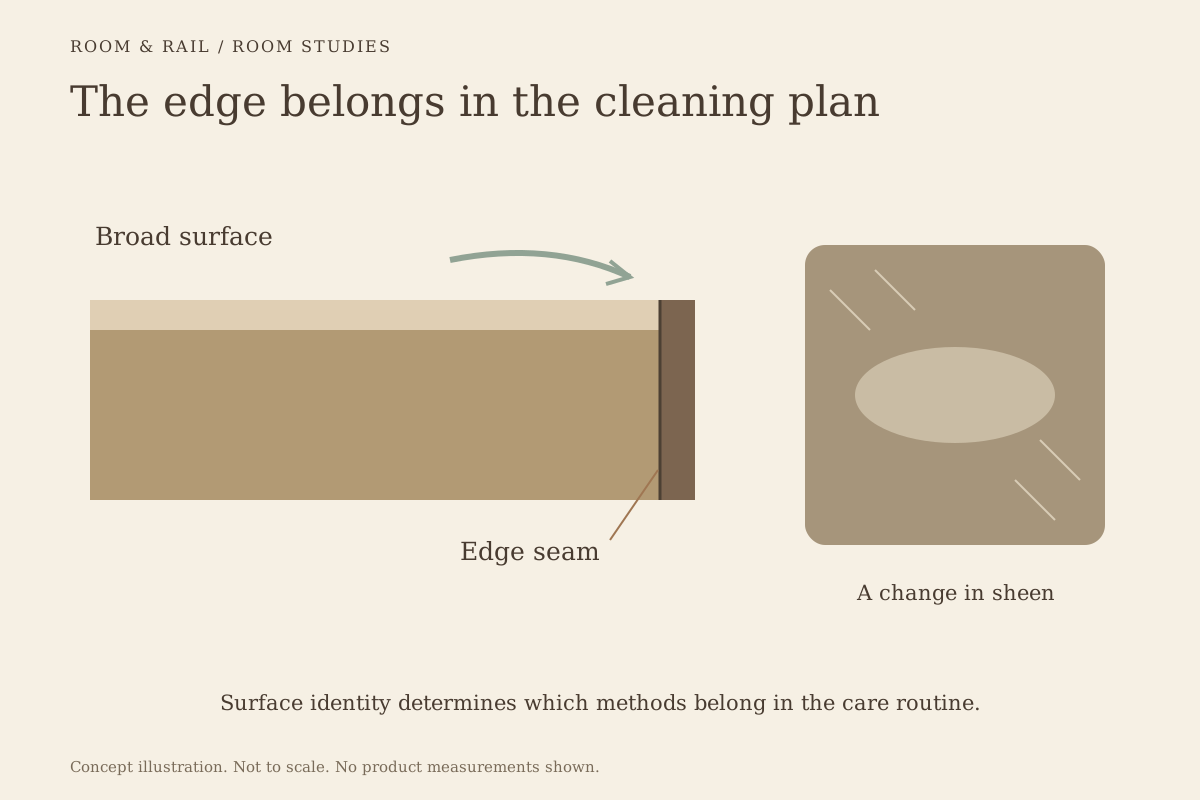
Formica's own laminate-care guidance uses nonabrasive cleaning, rinsing, and drying, while warning against flooding seams because water can reach and swell the substrate. That is a manufacturer-specific example of why the surface and its joints need different attention. It is not a care instruction automatically transferred to every laminate product.
For the selected top, obtain the applicable cleaning guidance and check it against the restaurant's actual products. The cleaning-compatibility article separates routine removal of soil from chemical compatibility. A cleaner used on the floor or kitchen equipment should not become the dining-table cleaner by default.
Solid wood also needs finish-specific care. An oil-finished cutting block and a coated dining top are different products, even if both are described as butcher block. Do not import a cutting-board oiling or sanding routine into the dining room without the tabletop manufacturer's instructions.
Understand moisture without treating every change alike
Wood exchanges moisture with its surroundings and can change dimension as that moisture content changes. The amount and direction depend on the material and construction. The solid-wood movement guide explains why that behavior belongs in the mounting and room-condition review.
A laminate assembly can have a wood-based substrate even though the decorative surface is manufactured. Damage or openings at the edge can therefore create a different moisture question from the normal surface-cleaning task. The core should be identified before the buyer assumes a laminate label means the whole top is unaffected by water.
This does not make all changes acceptable or prove a particular cause. A split, lifting edge, swollen area, or new unevenness deserves a specific assessment. Compare the observed condition with the actual product instructions instead of calling every wood change natural and every laminate change a cleaning failure.
Keep the base pairing in the material comparison
Changing material can change weight, thickness, mounting details, and the supported size. The table-system guide treats the top and base as a confirmed combination. A broad tabletop dimension is not enough to establish compatibility between two otherwise unrelated products.
The replacement-top guide is useful when existing bases are being retained. Identify the base, its condition, mounting plate, height, and approved top requirements. A new wood surface and a new laminate surface should each be reviewed against those same constraints.
Also consider the guest's feet and knees. A change that requires a different base can affect the room experience below the table even when the top looks similar. The base-footroom article keeps that relationship visible.
Compare cost through the intended scope of use
Use current configured prices for the selected sizes, edges, and finishes. Include the applicable base, delivery, assembly, and other charges in the same comparison. A starting price for one small top should not be compared with a larger configured surface from another material.
Follow the buying workflow and retain those assumptions in your purchasing comparison. Where care or replacement cost has not been measured, describe the requirement instead of assigning an invented annual saving. A lower purchase total and a simpler daily routine are different claims with different evidence.
Choose the material with its surroundings present
Save the approved top and base with the room's selected seating in the finish board. Keep the edge and actual finish visible in the reference, because those details often determine how the table relates to the rest of the furniture. Retain the material and care information alongside the visual choice.
Laminate and solid wood can each support a distinctive dining room. The better choice is the specific assembly that fits the restaurant's service, maintenance, and design priorities. Comparing that complete object makes the decision more useful than choosing a material category and hoping its reputation answers every remaining question.