The room journal
A wobbling restaurant table: find which part is moving
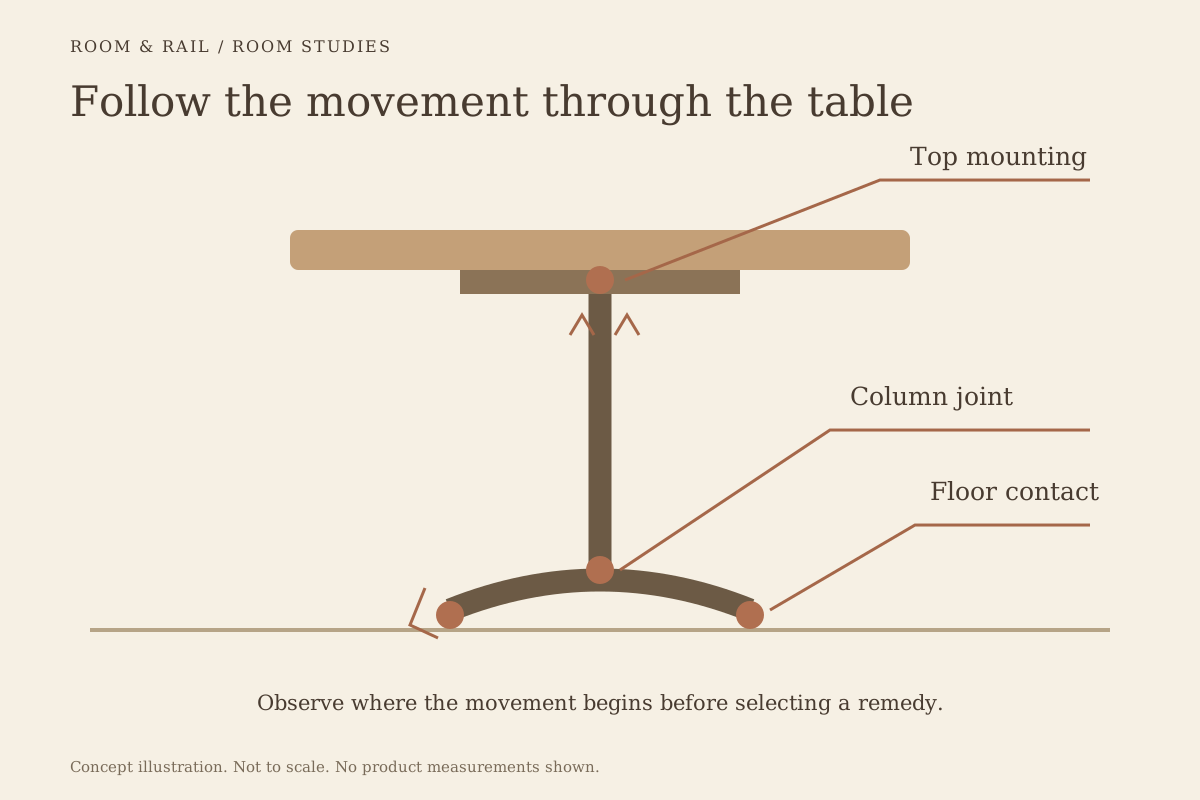
A restaurant table can wobble even when the floor appears flat because the visible surface is only one part of the support system. The feet, base, column, mounting plate, and top all contribute to the movement a guest notices. The first step is to identify where the movement occurs.
Treat that as a diagnostic question rather than an invitation to wedge something beneath the nearest foot. A floor-contact problem and a loose assembly connection need different responses. Use the product's approved inspection and adjustment instructions, and keep a table with a suspected damaged component out of ordinary use until it has been assessed.
Open diagram at full size (new tab) ↗
Separate rocking at the floor from movement above it
Watch the complete table while a responsible person performs the manufacturer's prescribed check. Does one floor contact lift while another remains planted, or does the column move while the base stays still? Does the top shift relative to the mounting assembly? Those observations point to different parts of the system.
The table-system guide identifies the top, mounting interface, and base as connected components. A tablecloth or a broad pedestal cover can hide a connection, so the visible top movement should not automatically be blamed on the floor.
Avoid loading or shaking the table beyond the intended inspection procedure. The purpose is to locate the concern, not demonstrate a failure. A guest's report that a glass moves during dining is useful evidence of a problem, but it does not establish which component caused it.
Understand why four contacts may not share one plane
A floor can look level from across the room while varying locally at the points touched by a base. A small surface difference beneath one foot can leave another foot without firm contact. The result may be rocking between two resting positions even though no obvious slope is visible.
Level and stable describe different things. Level refers to orientation; stable contact concerns how the support rests and resists the movement in question. A table could rest without rocking on a sloping surface and still have a top that is not level. Those observations should not be collapsed into one word.
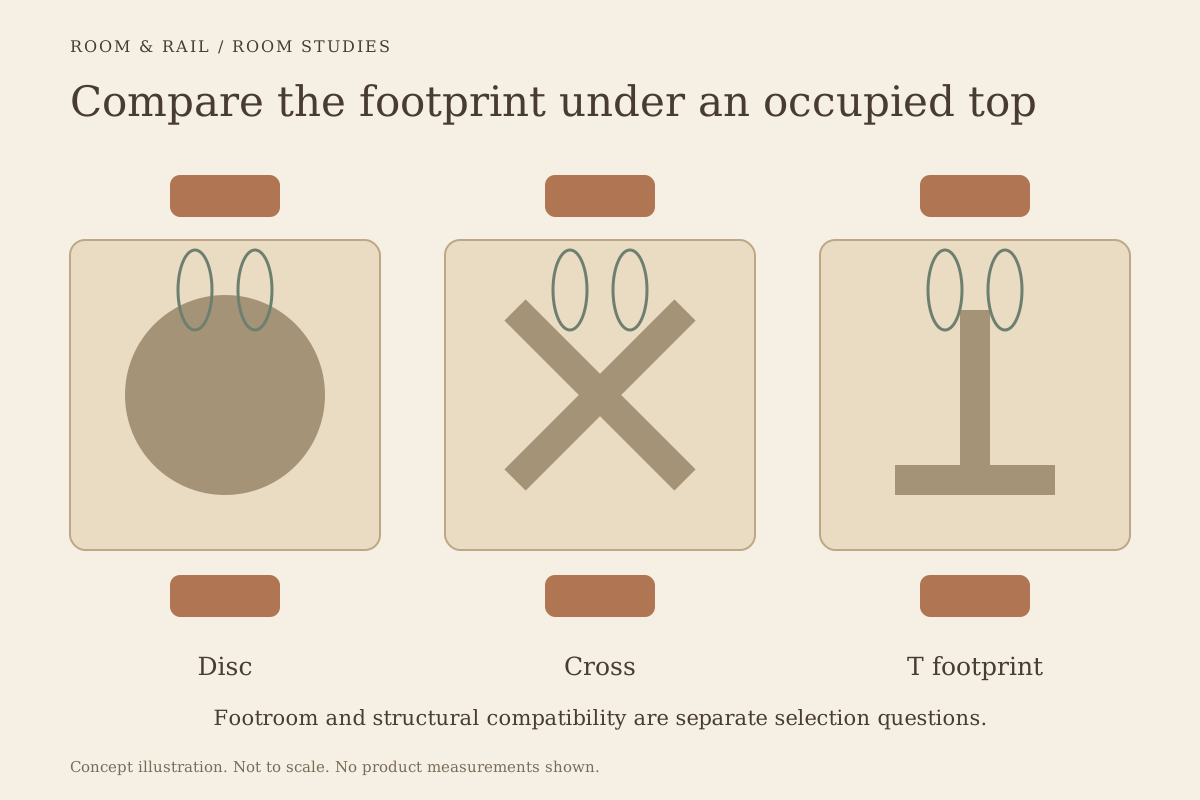
The base and footroom article considers the footprint around the seated guest. That same footprint determines where the table meets the floor. Changing the base orientation can place the contacts on different local areas, but any adjustment must remain consistent with the approved assembly and layout.
Identify the feet actually supplied
The FRU-TB-RND-TABLE base offers Adjustable Glides and Self Leveling Glides as separate options. The correct procedure depends on the selected version. Those labels do not identify the internal mechanism, and a smooth-looking cap is not proof that it can be turned, removed, or replaced with a generic part.
FLAT's published technology provides a specific example of a different approach. Its integrated system connects hydraulic cylinders at the floor contacts so their positions can adjust and lock through the fluid system. That explains how a purpose-built mechanism differs from an ordinary fixed foot.
The same manufacturer's guidance states that its integrated PAD is not a universal component that can simply be attached to any existing base. This is an external technology example, not a feature claim for every table base in our catalog. Compatibility remains specific to the selected product.
Review the column and mounting connection
If the floor contacts remain still while the top moves, inspect the assembly through the applicable instructions. A loose connection, damaged component, or incorrectly assembled part requires a different response from adjusting a glide. The correct hardware and tightening procedure belong to the actual base and top combination.
The replacement-top guide explains why a reused base needs more than a visually similar new surface. A changed top can alter the mounting, weight, size, and support requirement. A wobble that appears after replacement should prompt review of that complete pairing.
Do not drill another hole, add a guessed screw, or overtighten a connection to force the movement away. An improvised change can damage the top or leave the original compatibility question unanswered. Obtain the approved procedure or qualified service assessment for the assembly.
Consider the top's shape and mounting condition
A top that is warped or damaged presents another kind of problem. The base may rest correctly while the dining surface or mounting area no longer behaves as intended. Describe whether the concern is a moving assembly, an uneven surface, or a visible change in the material.
The wood-movement article explains why solid wood can change dimension with moisture conditions. That material behavior does not diagnose a particular table from a photograph. It does, however, show why an installation that restrains the top incorrectly deserves a separate review.
The laminate-and-wood comparison distinguishes different constructions. A swollen substrate near a damaged laminate edge is not the same as an adjustable foot sitting on a local floor variation. The response should follow the actual component and observed condition.
Recheck the table in its intended position
After an approved adjustment or service, review the table where it will actually be used. Moving it to another floor area can change the contact conditions. The room plan should identify the intended position, especially where tables are regularly combined or shifted for different party sizes.
The flexible-table article considers that operating pattern. Two separately stable tables can still meet at different top heights or create a lip at their joint. Aligning adjoining surfaces is a related task, but it is not identical to stopping a single table from rocking.
The round-versus-square study also helps keep shape decisions separate from support decisions. Changing the tabletop shape does not automatically correct a base or floor issue. Review the complete approved combination after any change.
Keep the daily response specific
Staff should know how to identify an affected table and route the concern through the approved process. A recurring folded-napkin fix can hide the fact that the same assembly needs attention repeatedly. The useful record names the table and the observed movement so the next review starts with a clear problem.
Follow the buying workflow when preparing the order, and retain the base model and instructions in your project documentation. The finish board identifies the visible top and selected finish, while the service record should also identify the less visible supporting assembly.
Where a table moves often, ask whether the selected base is appropriate for that routine and what adjustment it requires after relocation. Do not assume that a mechanism marketed for stabilization removes every inspection or maintenance need.
Resolve the moving connection, not merely the symptom
A successful correction follows the movement to its source: floor contact, base assembly, mounting, or top condition. It then uses the approved response for that part of the table. A level-looking floor and a heavy base are not enough to rule out the other possibilities.
That approach makes the furniture more understandable for the people who care for it. The table becomes a named assembly with a specific maintenance path, rather than a recurring nuisance handled by improvisation. The result is a clearer diagnosis and a better basis for deciding whether adjustment, service, or replacement is needed.