The room journal
Comfortable restaurant chairs: a repeatable buyer review at the table
Comfortable restaurant chairs are easier to choose when the review describes specific observations. A quick sit and a general approval leave little information for comparing alternatives. The chair needs to be assessed with its intended table, selected seat, and the movements that belong to the dining position.
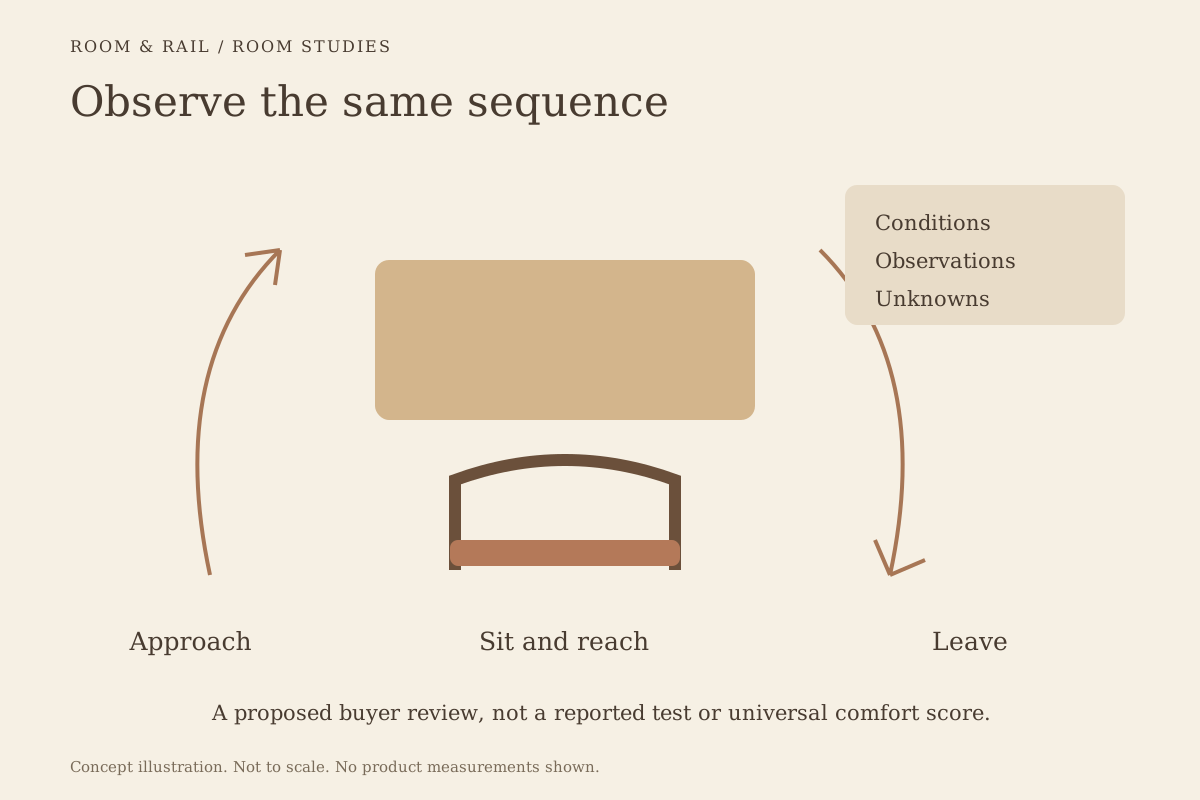
Use a repeatable buyer review rather than claiming a universal comfort score. The process below is a way to organize observations; it does not report a completed test or certify a product. Different reviewers may reach different conclusions, and those differences can help reveal what the room's seating mix needs.
Open diagram at full size (new tab) ↗
Prepare the actual pairing
Use the selected chair configuration and intended table where possible. If an exact sample is unavailable, describe what differs from the proposed order. A wood seat and a padded seat on the same model should not be treated as identical comfort samples.
The chair selection guide explains how to narrow the models before this stage. Keep the table's underside, apron, and base in the review. A chair that feels acceptable in open space may create another issue when brought toward the actual dining surface.
Follow the table-system guide for the pairing information. Missing dimensions should be requested before the team makes a fit assumption. Do not create a test arrangement by improvising unstable supports or modifying furniture outside the manufacturer's instructions.
Distinguish overall size from usable seat information
The FRU-2152 chair lists overall dimensions of 19 inches wide, 22 inches deep, and 33 inches high, with an 18-inch seat height. Those figures provide useful context, but overall width and depth are not automatically the usable seat dimensions.
The FRU-110 chair lists its overall footprint and several seat choices. If a particular seat dimension matters to the review, obtain it for the selected version rather than borrowing it from another model. Similar silhouettes can conceal different seat shapes.
Keep a listed weight capacity separate from comfort observations. It does not establish how a back contacts the body or how a guest approaches the table. Any load-rating or certification requirement should be reviewed through the applicable documentation, not a subjective seating trial.
Give reviewers the same ordinary sequence
Ask each reviewer to approach the chair, move it as they normally would, sit, and bring themselves into a dining position. Include a representative place setting and a simple reaching task that reflects the intended service. Do not ask participants to lean, overload, or misuse the furniture.
Use a consistent observation period for the compared models and record what it was. If the restaurant has several intended uses, review those uses separately rather than changing the conditions halfway through a comparison. The method should make the differences between chairs easier to interpret.
The venue brief helps choose the relevant activities. A cafe table, a full dining setting, and a waiting position are different contexts. The review should describe which one was examined instead of presenting the result as a verdict for every situation.
Ask for observations that identify a location or movement
Replace a single comfortable question with more precise prompts. Ask where the back contacts the reviewer, whether the seat edge is noticeable, and what happens when they move toward the table. Allow the person to describe their own experience without suggesting the preferred answer.
Record differences between reviewers rather than forcing an average judgment. One person may prefer a back shape that another finds intrusive. This does not automatically disqualify the model, but it is useful evidence when considering a room with varied seating positions.
Avoid collecting unnecessary personal or health information. The purpose is a furniture observation, not a medical assessment. Keep the notes focused on the chair, the table relationship, and the task, with consent from the people participating in the review.
Review upholstery as part of the assembled chair
A loose upholstery sample explains color and some surface texture, but it does not recreate the seat's shape or support. Compare the actual seat and back where possible. If the final upholstery differs from the sample chair, retain that limitation in the decision record.
The food-service upholstery guide separates comfort observations from care and material documentation. A reviewer liking a seat does not establish cleaning compatibility, and an approved care procedure does not establish that every reviewer will prefer the feel.
Check the visual direction separately through finish samples. This allows the team to notice when a preferred color is influencing an otherwise uncertain seating judgment. Both decisions matter, but they should remain identifiable.
Include approach and exit in the review
Watch how the chair interacts with the table support and neighboring furniture during ordinary entry and exit. Note specific contacts or awkward movements. Do not convert one successful trial into proof that the room's circulation is adequate for every user.
The layout guide explains why the wider plan needs its own measured and qualified review. Product fit, circulation, and accessibility cannot be settled by a small informal sample of participants. Carry any concerns to the people responsible for those decisions.
For arms or a strongly enclosed seat, ask for the relevant usable dimensions and review the actual approach. An overall footprint or load rating does not describe every aspect of inclusive fit. Keep another seating option available in the design discussion rather than assuming one form answers every preference.
Compare the findings without a false ranking
Make a short record for each model: configuration reviewed, table used, conditions, observations, and unresolved questions. If one chair is preferred, state the reasons in those terms. Avoid assigning a scientific-looking score unless a real, defined assessment method supports it.
Review whether a mixed seating scheme would address different preferences while remaining coherent in the room. A varied selection still requires each model to fit its intended position. Variety alone does not establish a better outcome.
The ownership comparison can then add handling, care, and purchase information. Keep those factors beside the comfort review without allowing a lower price or attractive finish to erase an unresolved fit concern.
Retain the reason for the chosen seat
Save the selected configuration and its review notes with the finish board. If the seat material, padding option, or model later changes, revisit the affected observations. A review of one version should not silently approve another.
The useful result is a specific, honest account of how the furniture was considered. It explains what was observed, what was not tested, and why the chosen chair belongs in the intended arrangement. That is a stronger basis for purchasing than a broad comfort claim that nobody can trace back to the actual product.