The room journal
Compare restaurant chairs through purchase, care, and later replacement
Comparing restaurant chairs over ownership begins with two actual configurations, not a general claim that one material lasts longer than another. The purchase price is visible early. Handling, cleaning instructions, parts availability, and the effect of a future replacement require more questions before they can belong in the same comparison.
Use a short model-level worksheet to separate what is known from what remains uncertain. This makes a higher or lower price easier to discuss without inventing a service life. It also keeps the room's visual requirements in the decision, since an inexpensive replacement can still change the intended palette.
Open diagram at full size (new tab) ↗
Choose candidates that solve the same requirement
Start with the role described in the chair selection guide. Compare models for the same room, table position, and intended use. A comparison between an indoor chair and an exterior model may be useful for planning, but it does not establish interchangeable choices for one position.
Two indoor examples are FRU-110, a metal ladder-back chair, and FRU-US-225, a wood chair with a square-back style. Both offer several seat choices. The actual configuration must be selected before their prices can be compared fairly.
The room may favor one silhouette, but retain the practical differences too. FRU-110 lists an overall depth of 20 inches, while FRU-US-225 lists 17 inches. That does not establish a preferred chair by itself; it identifies a difference to review against the actual table arrangement.
Label the price information by configuration and date
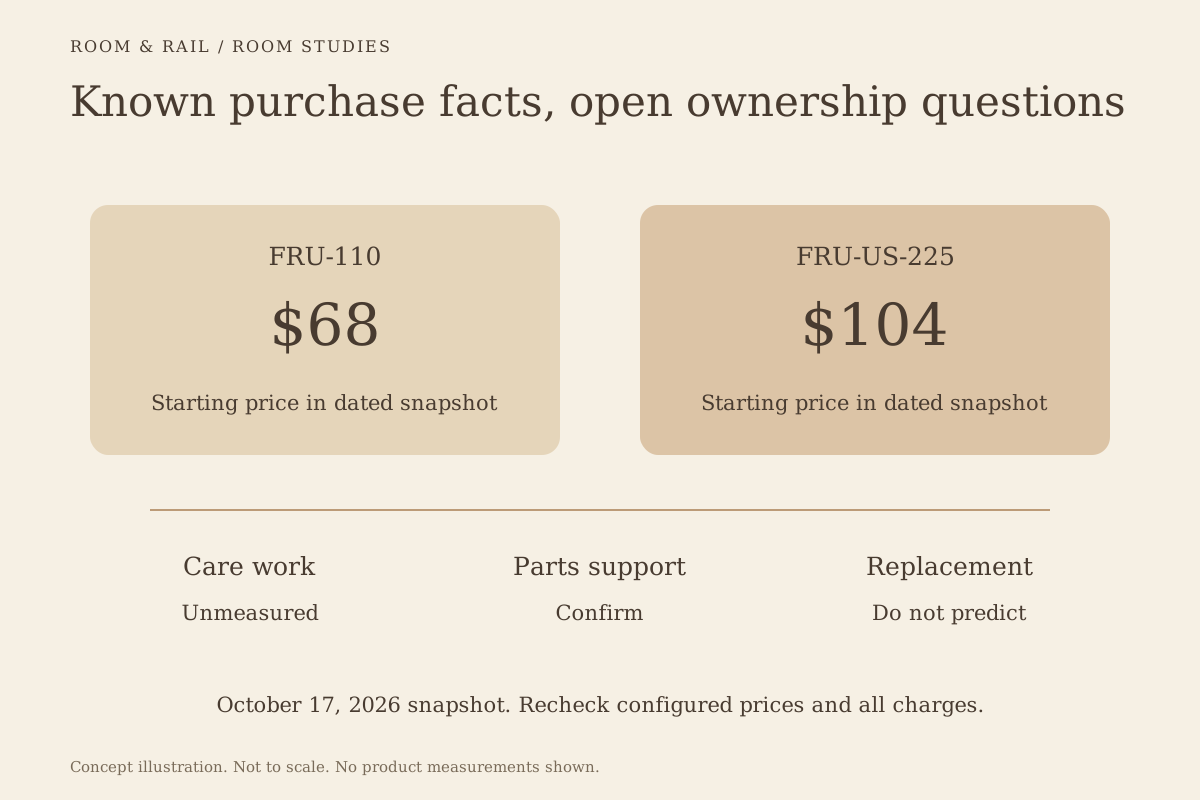
In the catalog snapshot checked on October 17, 2026, FRU-110 had a starting price of $68 and FRU-US-225 a starting price of $104. These are dated starting-price observations, not current configured totals or a promise about future pricing. Recheck the selected versions on their product pages.
The simple difference between those starting figures is $36 per listed item. That arithmetic does not establish a saving for the project, because the seat choices and other selections may change the amounts. Neither figure includes a confirmed delivered project total.
Use the buying workflow to separate furniture, shipping, tax, and other confirmed charges. Compare equivalent scope on both sides. A lower subtotal caused by an omitted component or different seat form is not a like-for-like result.
Ask what the daily task requires
The same catalog records list FRU-110 at 18 pounds and FRU-US-225 at 22 pounds. Include those figures in a handling discussion, then review the actual task. Weight alone does not establish how a person will move a chair through a narrow route or around other furniture.
Ask whether the chairs remain at their tables, move during cleaning, or enter storage. If stacking is required, obtain model-specific permission and limits. Do not assign a stacking benefit to either candidate because another chair with a similar frame can be stacked.
The layout-to-schedule guide connects these movements to the room. A chair that fits when tucked under a table may create another question during the daily reset. Record the observation or missing information rather than converting it into an unsupported labor-cost estimate.
Collect care information before pricing maintenance
Request the cleaning and inspection instructions for the exact frame and seat options. A metal frame with a fabric seat and a wood frame with a vinyl seat involve several surfaces, so a broad material comparison leaves much of the care question unanswered.
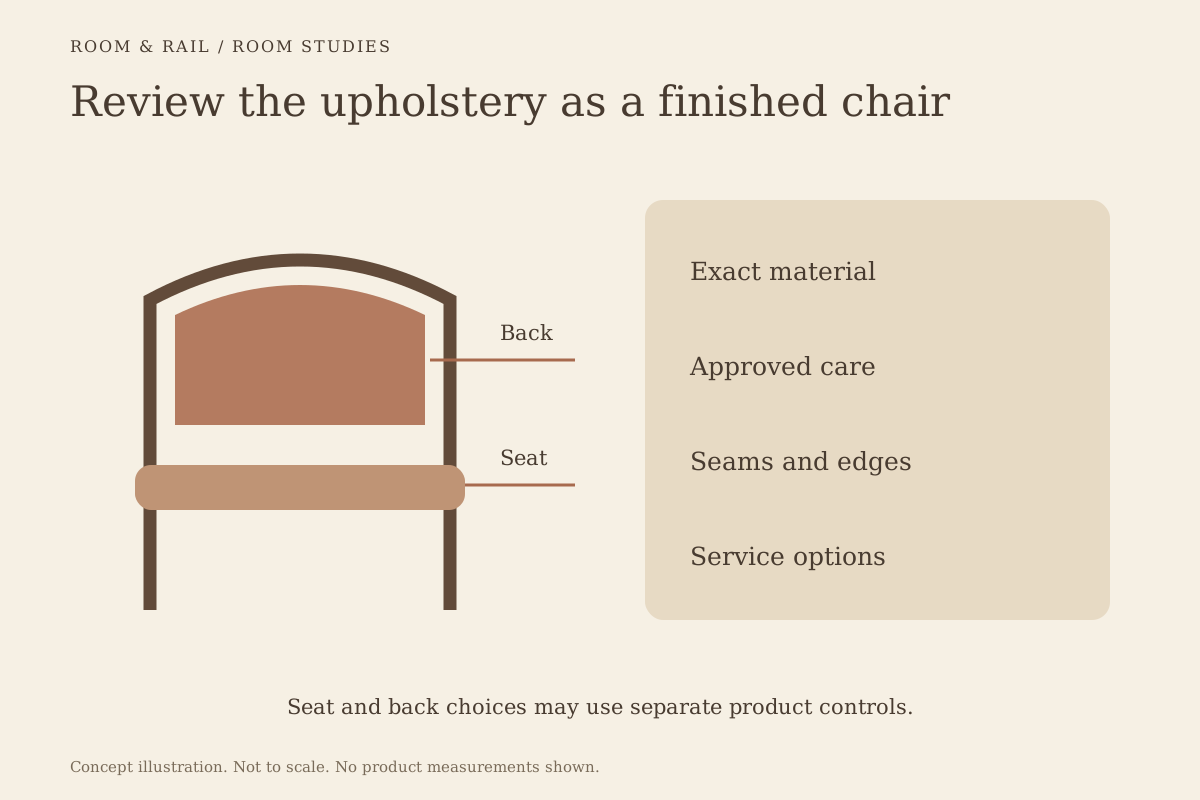
The upholstery guide identifies questions about approved cleaning products, seams, and serviceability. Obtain those answers from the applicable documentation. Do not assume that one upholstery family will save a particular amount of staff time.
If the restaurant later measures its actual care work, retain the task, conditions, and observation period with the result. Until then, mark that cost as unmeasured. A blank field is more honest and useful than a precise-looking annual amount built from an arbitrary estimate.
Examine the replacement path
Ask whether seats, glides, or other relevant components can be supplied for the exact model and configuration. Confirm who is permitted to perform the work and which instructions apply. A visible fastener or separate-looking seat does not establish an approved repair procedure.
Separate cosmetic change from structural concern. A worn finish may prompt a design discussion, while looseness or damage requires the appropriate inspection and action under the product guidance. Do not keep an unsafe item in use while trying to recover its purchase cost.
Read the materials guide before recording the exact finish identity in your project documentation. If a replacement seat is available, its current material may still need comparison with the existing furniture. Availability of a part and a close visual match are separate questions.
Include the cost of changing the room's appearance
A future substitute may preserve the function while altering the palette or silhouette. Identify the design features the restaurant wants to retain. The guide to mixed chair styles can help distinguish an intentional change from a collection of accidental replacements.
For a wood-finished room, review chair and floor tones as part of that continuity decision. The original finish name is useful, but it should not become a guarantee that a later product will look identical. Retain physical references where a close match matters.
Do not assign an invented financial value to visual consistency. Describe the practical consequence instead: another sample review, a revised board, or a deliberate change across a whole zone. Those are decisions the owner can evaluate with the actual project information.
Compare scenarios without presenting them as forecasts
The worksheet can hold the current configured purchase cost, known charges, documented care requirements, and confirmed replacement options. Keep separate rows for unknown quantities or future events. If a scenario assumes a replacement, state that assumption clearly rather than predicting when it will happen.
Save the compared configurations in separate finish-board versions. Use the sample-review method to resolve material questions before choosing a winner. This keeps an ownership discussion from drifting away from the actual pieces and finishes being considered.
Let the unanswered fields influence the decision
A model with clear documentation may be easier to assess than one whose future support remains unknown, even if both look suitable. Ask the missing questions before relying on the comparison. The finished worksheet should show where the evidence supports a decision and where judgment is still required.
Choose with the whole requirement in view, including the room's design, fit, and daily operation. The strongest ownership comparison does not promise the lowest lifetime cost. It makes the known differences and unresolved risks understandable enough for the buyer to decide deliberately.