The room journal
Commercial swivel bar stools: choose the movement as well as the shape
A swivel bar stool introduces movement into a furniture arrangement that is usually drawn as fixed outlines. The seat can turn toward a companion, away from the bar, or toward the route behind it. That movement changes how the stool occupies the room, so the mechanism deserves as much attention as the frame finish.
The first distinction is simple: a product described as swivel does not automatically disclose its turning range or return behavior. Read those details separately. Then evaluate the selected stool beside the actual bar or table, including the arms, back, footrest, and neighboring furniture that move or remain in place around it.
Open diagram at full size (new tab) ↗
Separate rotation from return behavior
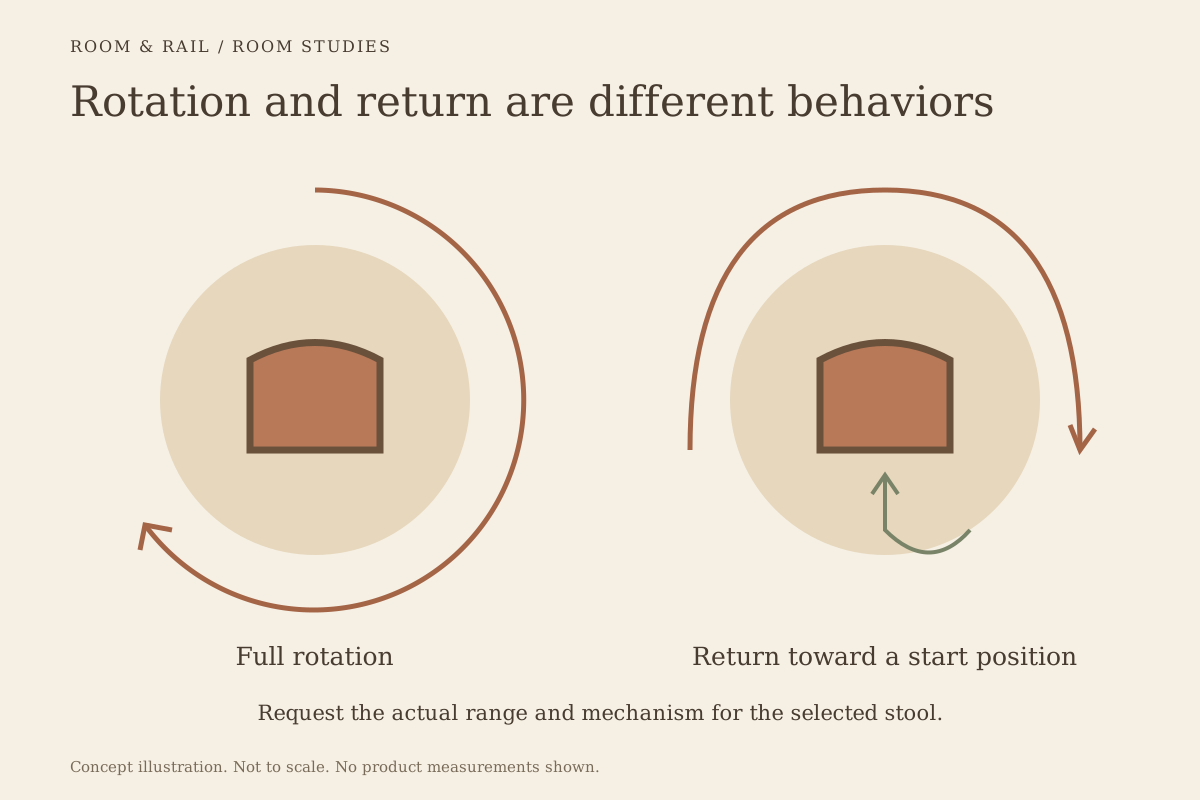
Rotation describes how far and in which direction a seat can turn. Return behavior describes what happens after the user releases it. A freely rotating mechanism and a mechanism that returns toward a starting position can look similar in a still photograph while creating different arrangements after guests leave.
The swivel-stool collection identifies relevant products, but the exact mechanism still belongs to the model specification. Ask whether the offered version has a limited range, a full rotation, or a return feature. Do not infer any of those details from the word swivel alone.
Richardson Seating provides a concrete manufacturer example: its 2500-series return swivel permits 90 degrees of movement to either side and returns to its starting position when unoccupied. The manufacturer separately offers full-rotation mechanisms. These details illustrate distinct mechanism types; they do not describe the stools in our catalog or establish replacement-part compatibility.
A returning seat may help maintain a preferred unoccupied orientation, while a freely rotating seat may remain facing elsewhere. Those are different behaviors, not a universal ranking. Decide whether a consistent view toward the bar matters to the room.
Read the catalog examples without filling in missing fields
The FRU-10427-BS-SW stool is listed with a swivel seat, metal frame, Silver finish, and overall dimensions of 18 inches wide, 18 inches deep, and 44 inches high. Its offered seat choices include wood and padded vinyl. The reviewed record does not specify the return mechanism or rotation range.
The FRU-130-BS stool is also marked as having a swivel seat. Its listed overall dimensions are 17 inches wide, 20 1/4 inches deep, and 43 inches high, with a metal-and-wood material description. Again, the swivel flag does not answer how the mechanism returns or where it stops.
These are useful candidates for a more specific inquiry, not evidence that both mechanisms work identically. Keep the missing details visible when comparing their shapes. The bar-stool selection guide connects those product questions to seat height, table clearance, and the room's intended use.
Draw the moving outline around the seat
A stool's front-facing width is only one view. As the seat and back rotate, their corners can describe a wider path around the pivot. Arms or a projecting back can change that path further. Obtain the relevant dimensions or review an approved sample through its intended movement.
Draw the moving envelope beside the bar edge, wall, neighboring stool, and any route behind it. The point is to identify possible contact before ordering a row of identical pieces. Do not turn a generic diagram into a required spacing number or assume all stools rotate around the same geometric center.
Use the layout schedule guide when documenting the parked position and the movement being reviewed as separate parts of your plan. A plan that looks generous when every stool faces forward may tell a different story when two guests turn toward one another. Review the ordinary interaction, not an exaggerated movement outside the product's intended range.
Notice which parts move and which stay still
The seat may rotate while the base and footrest remain fixed. In another construction, the relationship may differ. Identify the actual assembly rather than assuming that every visible part turns together. The guest's feet, knees, and hands interact with those separate components.
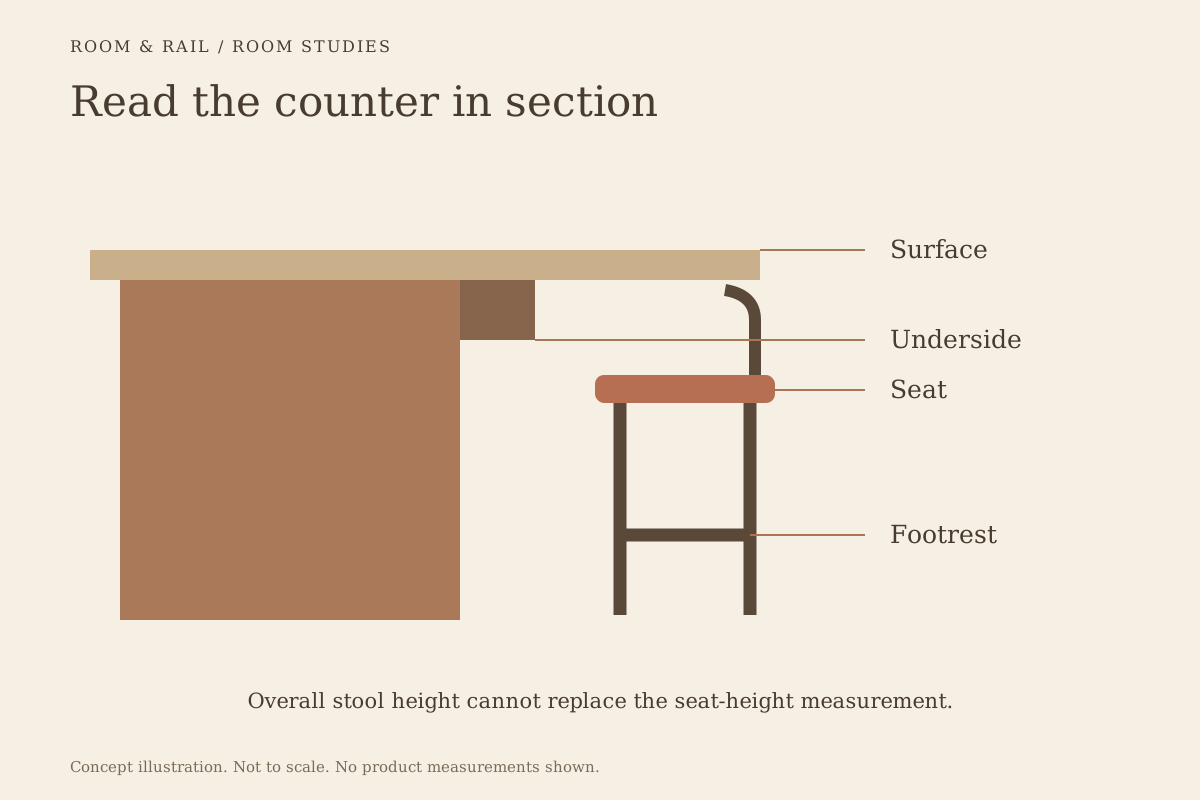
Use a sample to review approaching the stool, settling onto the seat, turning, and leaving it. Keep the correct table or bar height in the trial. A mechanism that feels straightforward in an open showroom can create a different experience beside a deep counter overhang or a neighboring armrest.
The chair comfort review offers a useful method for separating observations from universal claims. For stools, include foot support and the movement sequence in that review. A smooth subjective impression is not a documented durability result or evidence of suitability for every guest.
Consider the room when the seats are empty
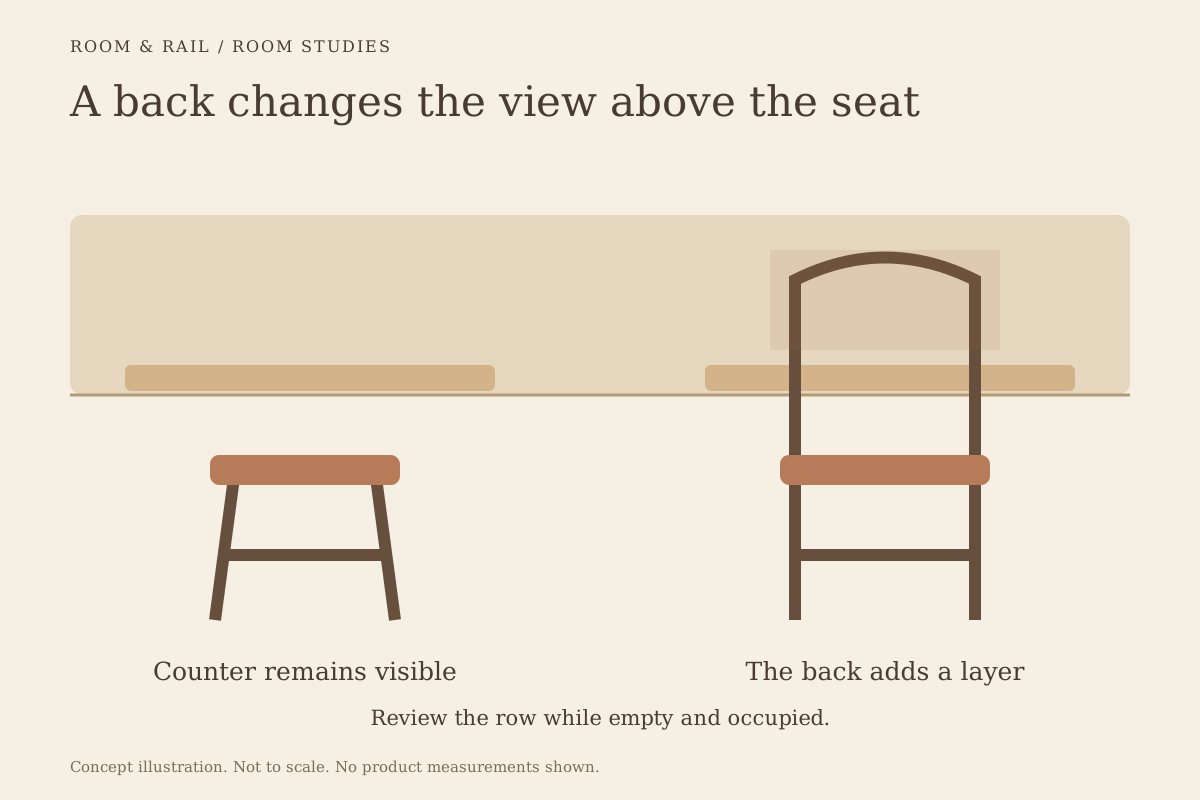
A row of backs can form a strong visual line across a bar. If freely rotating stools finish at different angles, that line becomes less uniform. A return feature may be worth considering when the room relies on a carefully repeated back profile, but its availability must be confirmed for the actual model.
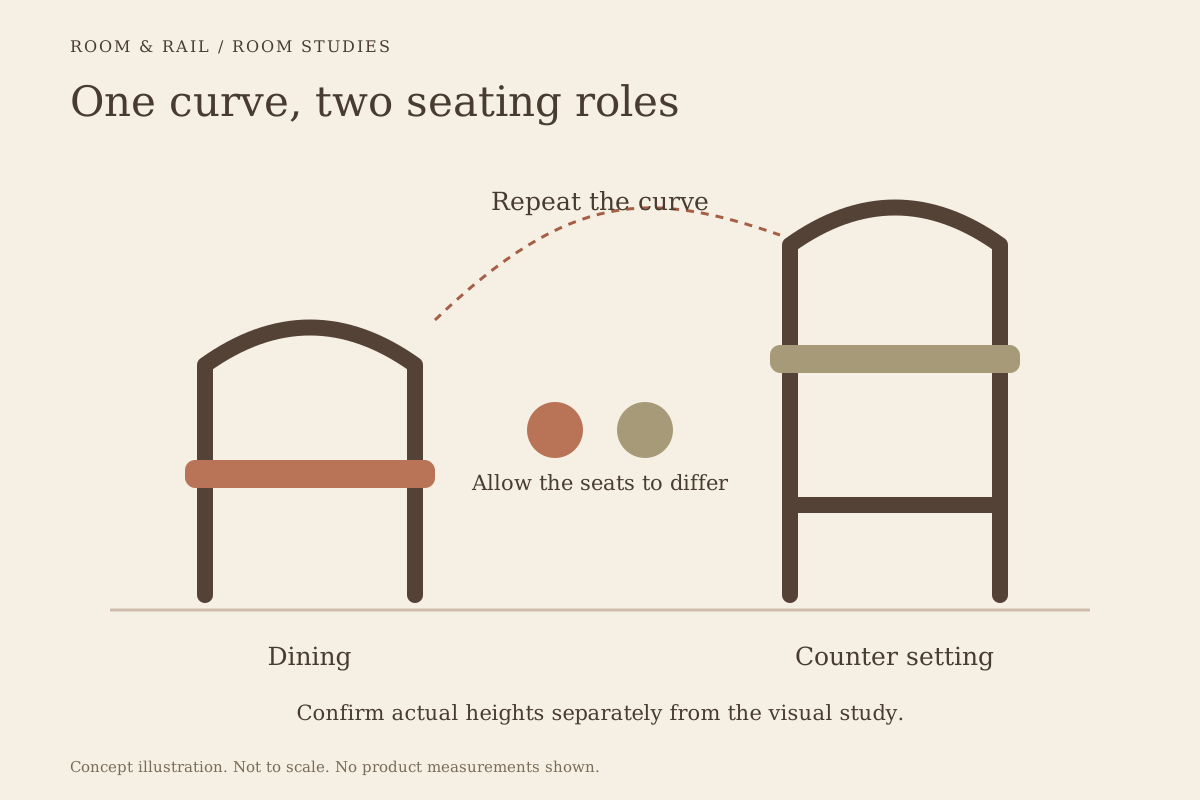
The chair-and-stool composition guide shows how a shared curve or finish can connect seating at different heights. Swivel behavior adds another variable: the chosen curve may be seen from the side or rear as often as from the front.
Review every exposed face of the selected seat and back. A finish board built from a single frontal image can overlook the rear upholstery, underside, or visible mechanism. The finish-sample guide helps keep the chosen material references attached to the complete product rather than one attractive view.
Keep mechanism maintenance model-specific
A swivel assembly is a component with its own attachment and service requirements. Ask which parts can be replaced, which fasteners are accessible, and what inspection or maintenance the manufacturer specifies. Do not apply oil, tighten unfamiliar fittings, or substitute a plate based only on its apparent size.
Replacement-part ranges illustrate why identity matters. Regal Seating lists swivel components alongside other replacement seating parts, but that does not establish compatibility with the models on this site. The original model and approved part reference are more useful than a generic request for a swivel.
The replacement-seat guide separates seat upholstery from the frame and attachment. Apply the same discipline here: a new padded top does not resolve a mechanism concern, and a replacement swivel does not establish that the rest of the stool remains in suitable condition.
Treat fixed bases as a different layout decision
Some swiveling stools have a fixed or bolt-down base. The FRU-BSC-135 model, for example, is listed with both Swivel Seat and Bolt Down marked yes. Those fields identify the configuration but do not provide anchoring instructions or establish that a particular floor can accept it.
A fixed base changes the adjustment available during service. The guest can turn the seat, but staff cannot simply shift the whole stool to make a little more room. Installation, substrate suitability, and the complete layout need their own review before the base position is finalized.
Choose the movement as deliberately as the finish
Save the preferred stool and selected seat in the finish board, with the mechanism details recorded as confirmed or still open. Keep a drawing or sample observation of its movement beside the furniture layout. That is more useful than a broad note saying swivel stools throughout.
A successful selection gives the guest a clear way to use the seat and gives the room a predictable arrangement. Frame shape, turning behavior, clearance, and serviceable parts all contribute. Resolving those relationships before purchase lets the visual choice remain convincing when the furniture is actually moving.