The room journal
Wood or metal bar stools: compare the complete frame and footrest
Wood and metal bar stools can each give a busy bar a convincing character, but the frame material does not answer the entire buying question. The footrest, joints, seat attachment, finish, and daily handling all remain part of the assembly. A material label is a starting point, not a durability ranking.
Compare named models in the actual room before making a broad wood-versus-metal decision. The tall frame places more of the stool in view than a dining chair, and the foot support adds a repeated line near the floor. Those visible details should be considered alongside the construction information that a photograph cannot supply.

Open diagram at full size (new tab) ↗
Compare the complete models, not two material categories
The FRU-US-225-BS wood stool has a listed wood frame, curved-back style, and 30 lb weight. The FRU-110-BS metal stool lists a metal frame, ladder-back style, and 22 lb weight. The difference is eight pounds in the current records, but the models also differ in form and offered options.
That is a useful comparison of two candidates, not evidence that wood stools are always heavier. The bar-stool collection includes many different constructions. Frame material, section size, seat, back, and mechanism all contribute to a particular product's weight and appearance.
For the room brief, identify why those two candidates are being compared. Perhaps the wood back relates to existing millwork while the metal rails echo a partition. A clear design reason produces a more meaningful sample review than selecting one arbitrary example from each material category.
Read the tall frame as a network of connections
A stool has legs or a pedestal supporting a seat above the floor, with other members connecting those elements. On a four-leg design, rails and foot supports may also become part of the visible frame pattern. Ask which components are structural and which are replaceable covers or decorative parts.
The published FRU-US-225-BS description identifies solid beech wood and mortise-and-tenon construction for that stool itself. The wood-construction guide explains the joint relationship: a projecting member fits into a receiving recess. That documented method gives the comparison more substance than a general wood-frame label, without proving a lifespan or ranking it against every metal assembly.
For metal, obtain the model's actual construction description. A photograph of a smooth corner cannot disclose the full weld or internal connection, and a dark coating does not identify the underlying metal. Keep the stated material and joining information separate from assumptions about what a commercial stool usually contains.
Give the footrest its own comparison
Foot support is one of the clearest stool-specific differences from a dining chair. Compare its position relative to the seat, the width available to the feet, and how the member connects to the frame. A footrest that looks substantial can still sit in the wrong position for the intended guest or counter relationship.
The FRU-US-225-BS configuration offers Foot Rest choices named Gold, Black, and Silver. Those are selectable appearance references, not proof of three different structural materials or maintenance methods. Confirm what changes with the choice before describing it as a different metal construction.
The footrest guide considers wear at this contact area. A mark on a finish, a damaged protective component, and a loose connection are different problems. Avoid assuming that changing a color or adding an improvised cover resolves a construction concern.
Separate coating performance from frame identity
A wood frame can carry different stains or coatings; a metal frame can have different surface treatments. Cleaning compatibility belongs to the actual finish, not only to the substrate beneath it. Request the care instructions for the selected configuration and the cleaning products used by the restaurant.
The materials notes help preserve that distinction. A finish called Walnut does not make a metal frame into walnut wood, and a Silver option does not establish stainless steel. The purchasing record should use the material description and option name as separate pieces of information.
For a sample, look at the places guests and staff regularly touch: the top of the back, seat edge, footrest, and lower frame. Review how the finish looks at those transitions. This is an appearance and access review, not an accelerated wear test or a prediction of years in service.
Compare the seat as an independent surface
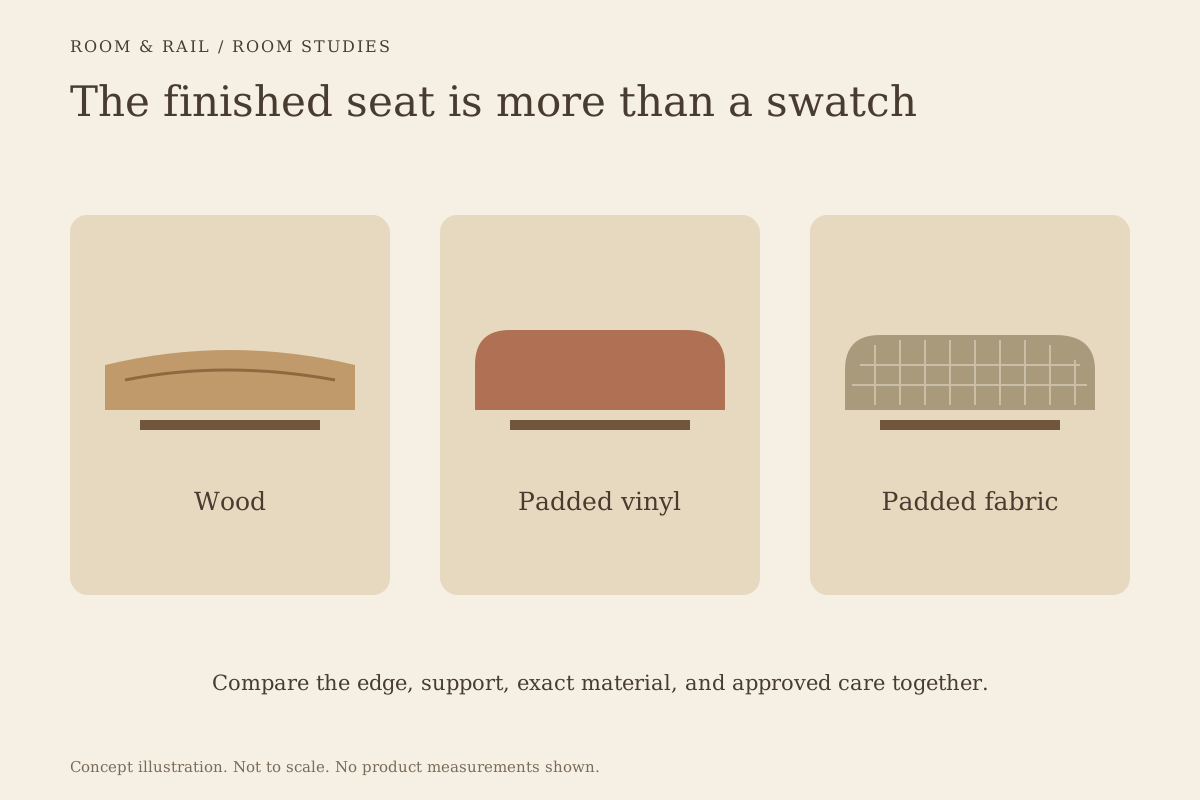
Both named examples offer more than one seat type. Wood, padded vinyl, and padded fabric choices can create a different visual balance on the same frame. The seat may become the broadest color area, while the frame supplies a finer outline repeated down the bar.
The seat-material comparison considers that surface at a food-service counter. A metal frame with a padded seat should not inherit the cleaning instructions of an all-metal stool. Likewise, the wood frame's care instructions do not specify how an upholstered seat should be treated.
If future seat replacement matters, ask about approved parts for the exact version. The reupholstery decision guide separates the condition of the supporting frame from the cost and scope of renewing the seating surface. Those are connected decisions, but they are not interchangeable.
Review staff movement without assuming a winner
The listed eight-pound difference between the two examples can inform the handling discussion, but it does not prove a task is suitable for any individual worker. Shape, balance, available grip, route, and repetition also matter. A sample trial should follow the approved handling method and workplace procedures.
Use the lightweight furniture guide to separate one ordinary repositioning move from a full room reset. Stools may require different grips and have taller or wider bases than dining chairs. Do not assume a method used successfully on a chair transfers unchanged to the stool.
Also consider whether the room needs movable or fixed seating. The bolt-down layout article addresses a different arrangement in which the base position is permanent. Selecting a metal frame does not, by itself, mean selecting that kind of installation.
Build a palette from the actual proportions
Wood can repeat a bar's millwork, but repeating the same tone everywhere may obscure the stool's outline. Metal can create a contrasting line, but a dark frame against a dark counter may become less visible than expected. Compare the actual surfaces under the room's lighting rather than assigning a mood to the material name.
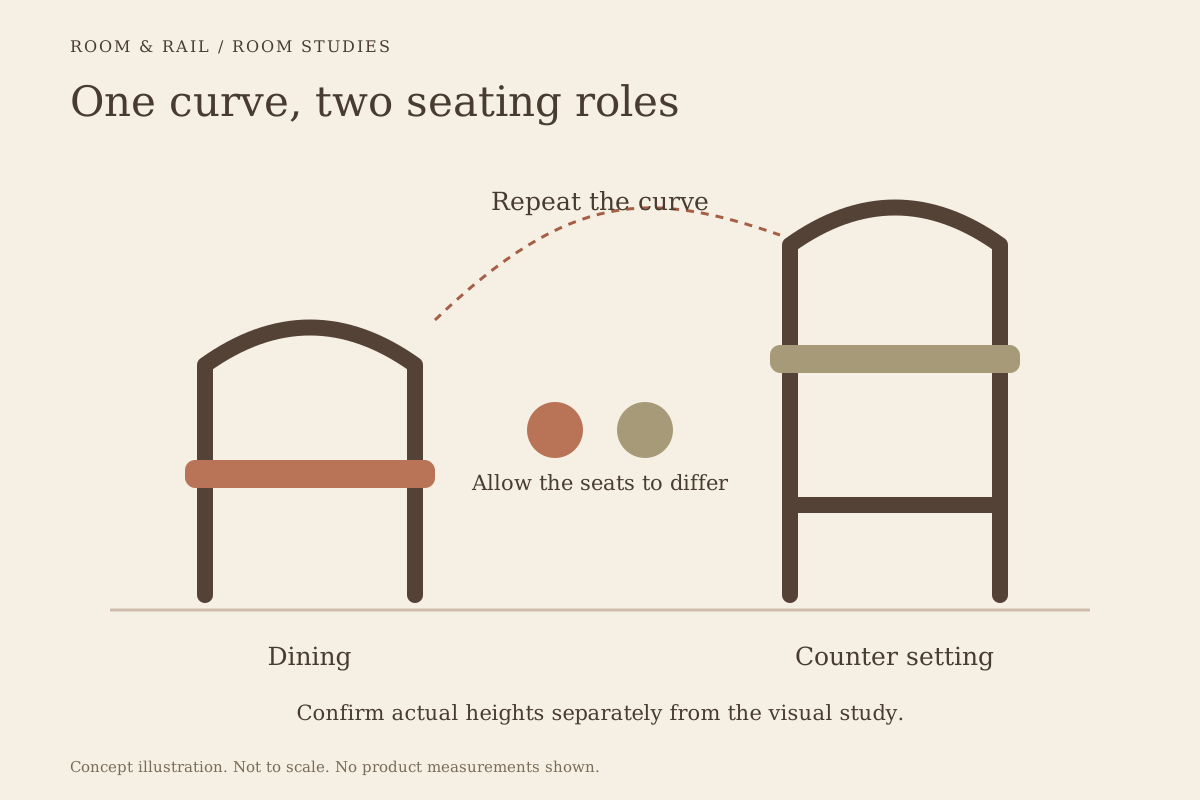
The chair-and-stool study offers a way to connect the bar to dining seating through a shared curve or seat color. The connection can remain clear even when the frames use different materials. Keep the selected finishes identifiable on the finish board.
Choose the assembly that fits the bar's work
A useful decision explains the chosen frame, seat, footrest, finish, and handling arrangement together. It also states which construction questions have been answered and which need supplier clarification. That record is more informative than a general claim that one material is better for busy restaurants.
The visual result should belong to the room, while the documented assembly belongs to its actual service conditions. Wood and metal offer different routes to that result. Comparing complete models lets the restaurant choose deliberately without turning a material preference into an unsupported promise about performance.