The room journal
Stackable patio furniture: plan the path and the place it rests
A stackable patio chair solves only part of the storage problem. The restaurant also needs to know how many chairs may be stacked, how large the stack becomes, how it is moved, and where it can stand without blocking access. A useful storage plan follows the furniture all the way from the table to its resting place.
Start with the reason for moving it. Daily closing, a weather response, a private event, and seasonal storage can require different amounts of space and handling. The furniture should support the routine the site will actually perform, rather than an idealized stack shown in a product image.
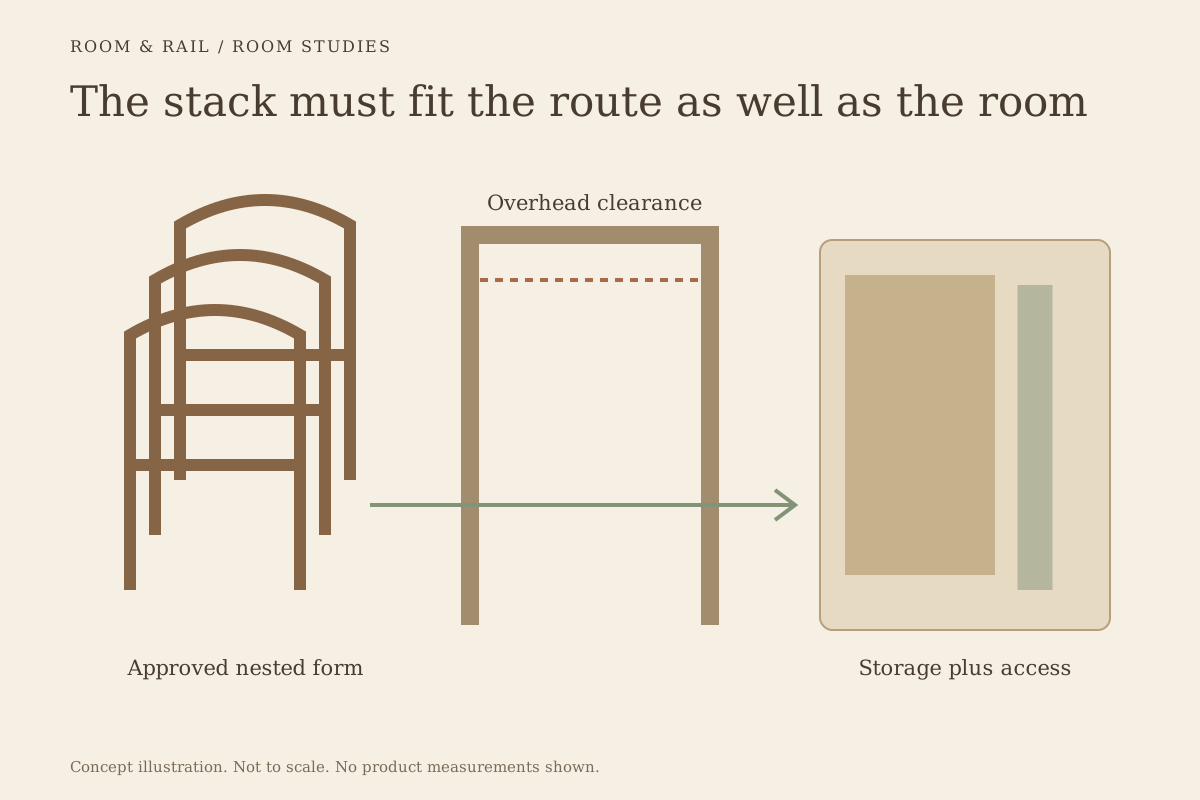
Open diagram at full size (new tab) ↗
Distinguish stackable from a complete stacking specification
The aluminum faux-teak chair FRU-402-ECO is listed as stackable and weighs 5 pounds. The Marina rope chair is also listed as stackable and weighs 9 pounds. Those exact records establish a feature and individual weights.
They do not establish the approved maximum stack, stacked dimensions, compatible trolley, or handling method. Obtain those details for the selected model before allocating storage. An individual chair's height multiplied by the quantity is not a useful estimate of a nested stack.
The indoor stacking guide makes the same distinction. Outdoor use adds exposure, drainage, and the possibility that the storage location itself is affected by weather.
Work from the permitted stack, not the desired floor area
For a hypothetical planning exercise, 32 chairs stored in approved stacks of eight would require four stacks. If the approved limit were four, the same quantity would require eight stacks. The arithmetic changes the number of footprints, but neither number is a recommendation for a catalog product.
Use the actual stacked width, depth, and height to place those footprints. Include the space needed to approach, lift, or move the stacks using the approved method. A tightly packed storage drawing may omit the access needed to retrieve the first group.
Use the layout guide when preparing a separate closing arrangement in your project plan. Keep required routes and equipment access available in that arrangement as well as in the dining plan.
Check overhead restrictions along the route, including door closers and low storage shelves. A stack that fits the destination's floor outline may still be too tall for the opening used to reach it. Use the approved moving configuration for that comparison.
Review the complete moving load
Individual weight matters to handling, but the number of pieces being moved and the route matter too. A light chair repeated many times can still produce a substantial task. A taller nested stack may change the view ahead or the way it passes through a doorway.
For a labeled arithmetic example, six 5-pound chairs total 30 pounds before any trolley or accessories. That calculation does not authorize carrying a six-chair stack. The permitted stack and handling method must come from the product guidance and the site's work assessment.
The chair-handling article explains why the grip, shape, route, and task belong beside weight. Do not turn a lower product weight into an automatic claim about staff effort or safety.
Protect the surfaces at their contact points
Stacking brings parts of the furniture into contact. The intended nesting geometry, protective caps, and contact surfaces help define how the chairs should meet. A missing component or an incompatible chair mixed into the stack can change that relationship.
Inspect the actual stacked arrangement and follow the product instructions. Do not improvise with unrelated padding that traps moisture or changes the way the stack sits. Approved replacement glides or stacking components should match the selected model.
The coastal-patio article is relevant where salt and humidity affect the storage area. A sheltered corner is not necessarily a dry, clean environment, especially when furniture arrives there wet after service.
Choose the storage environment as carefully as the stack
Fermob's winter-storage guidance recommends a dry, ventilated location protected from impacts for its furniture where possible. That is a manufacturer-specific example of storage requirements, not an instruction to apply every Fermob practice to other products.
Get the selected furniture's storage and care guidance, then compare it with the available space. Consider ventilation, water entry, nearby cleaning equipment, and the chance of other stored items striking the furniture. A room labeled storage may still be unsuitable for the intended materials.
The seasonal-cost guide includes the space and work needed to maintain that arrangement. Storage has an operating cost even when the restaurant already owns the room.
Include tables in the closing sequence
Chairs may stack while the patio tables remain full-size. Some outdoor bases have folding features, but the complete table's approved folding and storage arrangement needs to be understood with its selected top.
The folding aluminum base FRU-TB-19S is listed for indoor and patio use and offers standard and bar-height choices. Its product name identifies a folding base, not permission to stack complete tables in any orientation.
Plan where tops, bases, and accessories will rest without putting unintended pressure on surfaces or mechanisms. The chair arrangement should not leave the larger table assemblies as the last unresolved part of closing.
Make the routine compatible with the patio design
Furniture that looks visually light may be useful to move, but daily storage can introduce scuffs, mixed positions, and missing pieces if the routine is unclear. Keep the selected furniture groups identifiable, especially where similar chairs have different finishes or approved uses.
Use the finish board to retain room groups and quantities. The outdoor palette guide helps preserve visual continuity if some furniture moves inside while other pieces remain dedicated to the patio.
Review the opening sequence as well as the closing sequence. The first tables needed for service should be reachable without moving every stored stack, and the room should return to its approved layout rather than drifting each day.
Make storage part of the purchase
A good stackable-furniture choice comes with a workable path, an approved stack arrangement, and a suitable place to keep it. Those details matter as much as the feature label because they determine whether the restaurant can use the benefit consistently.
Compare patio chairs through that complete routine before ordering the full quantity. The result should be a patio that can be opened, changed, and closed deliberately, with the furniture protected and the surrounding space still usable.