The room journal
Bucket restaurant chairs: compare enclosure with the room footprint
Bucket restaurant chairs place more of the seat and back within a surrounding form than an open ladder-back chair does. That enclosure can create a strong visual presence and a particular seated experience. The useful buying question is how the actual inside shape relates to the person, table, and room position.
Do not reduce the comparison to whether a bucket chair looks comfortable. Overall dimensions, usable seat dimensions, the entry opening, and the table relationship answer different parts of the question. A carefully selected model can belong in the scheme without being treated as the automatic choice for every seat.

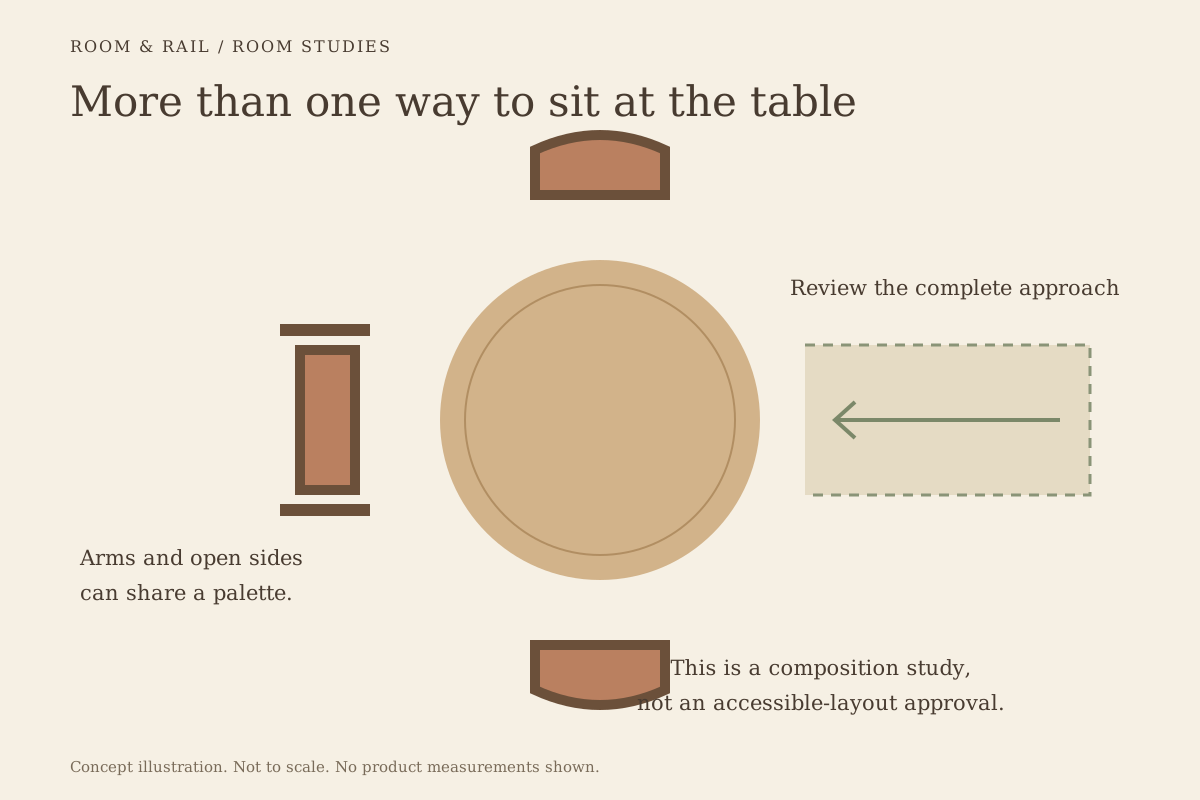
Open diagram at full size (new tab) ↗
Read the outer shell and the usable space separately
The outside width of a bucket chair may include upholstery, frame members, or a wrapping back. It is not necessarily the narrowest space available around the seated person. Request the usable seat width, depth, and relevant opening dimensions when those details affect selection.
The FRU-727-130 model lists overall dimensions of 19 inches wide, 22 inches deep, and 32 inches high. The FRU-727-148 model lists 21 1/4 inches wide, 22 1/2 inches deep, and 33 1/2 inches high. These figures identify different outer footprints, not a complete inside-fit comparison.
The second record also lists a seat height of 19 1/2 inches. Keep that label distinct from overall height. A taller back in a photograph does not tell you where the seat sits in relation to the table.
Compare the opening used to enter the seat
A surrounding form can narrow or change direction as it rises around the seat. Review the actual approach rather than assuming that the widest outside measurement describes the entrance. The available opening may matter as much as the seat surface itself.
Use the inclusive-fit guide to identify the dimensions needed for a particular question. Avoid assigning a bucket form to all guests or using a capacity rating as proof of a comfortable fit. A broader selection of seating forms may be worth reviewing for the room.
The armchair and side-chair comparison offers a related distinction. Even if a bucket chair does not have separately projecting arms, its enclosing sides can still affect approach and movement. Describe the actual geometry rather than relying on the category name.
Pair the chair with the table before judging the profile
Bring the intended table into the comparison, including its underside and support. A wrapping back or seat form may look balanced beside the top while leaving another question about how close the chair can be brought to the setting. Review the assembled relationship.
The table-system guide explains how top thickness, apron, and base placement can matter. Do not borrow a table-fit conclusion from an open-backed chair that previously occupied the position. The new model has its own shape and dimensions.
Use a sample where practical and follow the comfort-review method. Observe ordinary entry, sitting, reaching, and exit. The procedure is a buyer review, not a reported test result or a certification of universal suitability.
Understand the material behind the enclosing shape
The bucket appearance does not identify the frame construction. FRU-727-130 lists a metal frame and vinyl seat, while other models can use different finishes or constructions. Read the actual record instead of describing every curved shell as molded wood or a single material.
The materials page helps preserve that distinction. A wood-look finish on metal should retain its stated construction. The room can use the visual warmth while the purchasing record remains clear about what the frame is.
For the upholstery, review the food-service material questions. The broad continuous surface may make seams, junctions, and edge details more noticeable in the care discussion. Ask for the approved instructions rather than assuming the shape is easy to clean because it appears smooth.
Compare movement in the actual arrangement
A deeper or wider outside footprint can change how the chair moves past neighboring furniture. Review the position on the measured plan and observe the ordinary task with a sample where possible. The tucked-in product outline should not become the full occupied movement allowance.
The layout-to-schedule guide keeps that review connected to the selected configuration. If the model changes, update the plan symbol and relevant questions. Keeping the same chair count does not prove that the replacement arrangement works.
For a swivel bucket design, the movement review needs the actual mechanism and rotation information. Do not infer swivel behavior from the rounded seat form. The swivel-stool guide explains why a movement label alone leaves questions about return and clearance.
Give the larger surface a role in the palette
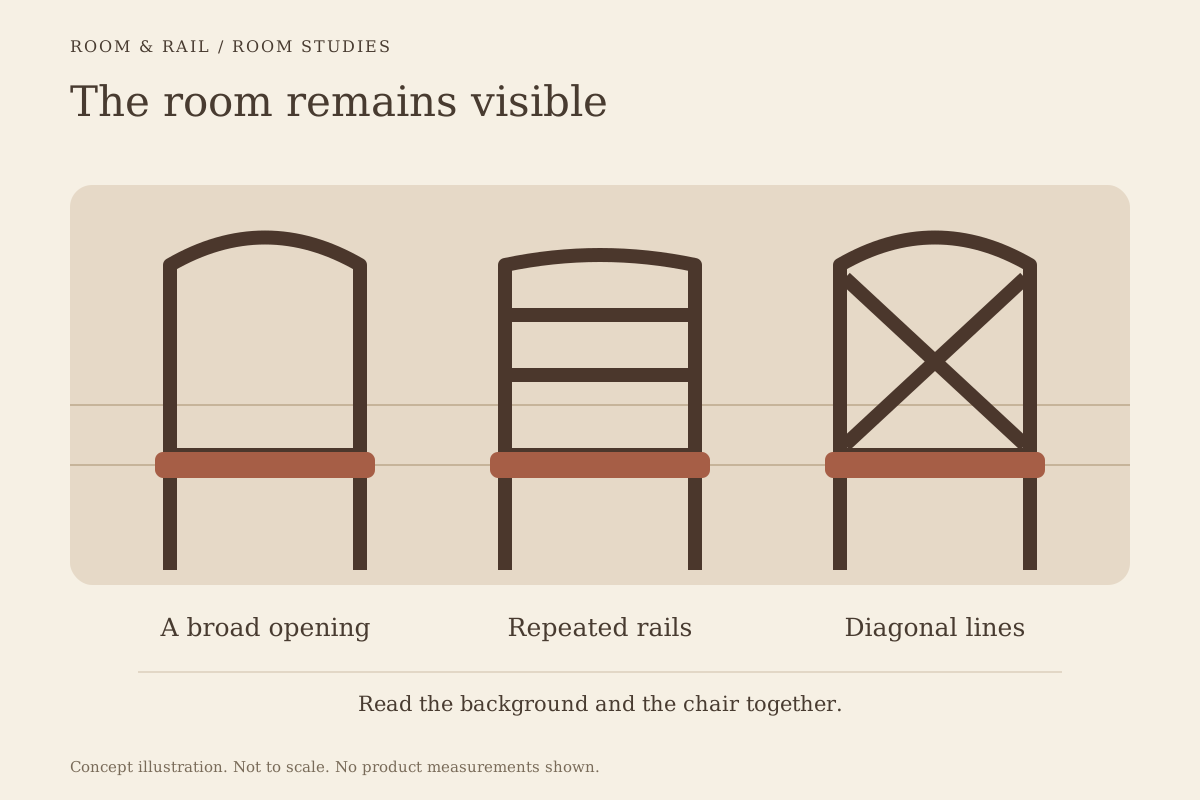
A bucket chair often presents a substantial upholstered area when compared with an open frame. Decide whether that surface should become a focal color or a quieter background. The room may need a simpler neighboring table or wall treatment to keep the composition readable.
The guide to upholstered chairs beside bold surfaces explores that relationship. Compare the chair from the entrance and from a seated viewpoint. Its back may occupy a much larger part of one view than the seat swatch suggests.
If the room mixes chair forms, use a clear distribution rule from the mixed-style guide. A few broader upholstered shapes can be deliberate, but their placement should follow actual fit and design decisions rather than an arbitrary pattern.
Keep replacement questions specific to the assembly
Ask whether the selected model has an approved replacement seat or bucket assembly and what identification is needed. Similar-looking shells may use different mounting patterns, hardware, or dimensions. Do not assume that an available replacement from another range will fit.
The replacement-seat guide compares refurbishment with a new chair through compatibility, frame condition, and the finished appearance. Keep those questions separate from the initial choice of upholstery color. New-product options do not guarantee later component availability.
Choose the enclosure for its actual position
Save the selected model and upholstery on the finish board, with the usable-dimension questions and table pairing resolved or clearly identified. The final record should explain why this particular enclosed form belongs in the room.
A bucket chair is a specific seating geometry, not a comfort promise. Reviewing its inside space, outer footprint, movement, and visual surface lets the design use that geometry deliberately. The result is a more precise choice than approving a curved silhouette and leaving the fit to be discovered later.