The room journal
Poly patio furniture: read the material behind the appearance
Poly patio furniture can be an appealing category for a restaurant, but the name does not establish one material, recycled-content percentage, or service life. It can be used broadly around plastic lumber, molded products, and wood-like synthetic components. The useful buying decision starts with the actual product construction.
Separate the environmental claim from the operating qualities you need. Recycled content, repairability, cleanability, and expected use are related purchasing considerations, but one does not prove the others. A precise material description gives the restaurant a stronger basis for comparison than a general promise of greener furniture.

Open diagram at full size (new tab) ↗
Identify what the product is actually made from
An HDPE lumber component, a molded resin shell, and a synthetic slat attached to a metal frame are different constructions. The polymer, additives, reinforcement, hardware, and joining method may differ. A wood-like color or grain does not reveal those details.
The aluminum faux-teak chair FRU-402-ECO lists an aluminum frame and plastic-teak seat. That record does not identify the seat polymer or recycled content. It would be inaccurate to rename it recycled HDPE simply because it appears within a broad poly outdoor category.
The material comparison guide explains how to read mixed assemblies. Keep the frame, seat, fasteners, and finish separate until the product evidence establishes their relationship.
Distinguish a brand example from a category claim
POLYWOOD's published material information identifies its own lumber as HDPE sourced from post-industrial and post-consumer recycled materials. It also says the recycled percentage can vary with material availability. That is a specific manufacturer's statement about its lumber, not proof about every product called poly furniture.
The same page discusses recycling production scrap back into manufacturing. A production-scrap recovery rate and the recycled-content percentage of a finished chair are different measurements. One should not be substituted for the other.
Use this distinction when reading any supplier's sustainability statement. Identify what the number describes, which product or component it covers, and whether it refers to the material going into the furniture or a factory process.
Keep the denominator visible in percentage claims
Consider a hypothetical 30-pound chair containing 24 pounds of plastic components and 6 pounds of other materials. If those plastic components were documented as 75 percent recycled content by weight, they would contain 18 pounds of recycled material. That would be 60 percent of the chair's total weight, assuming no recycled content in the other materials.
The example is arithmetic, not a catalog product claim. It shows why 75 percent recycled plastic and 75 percent recycled chair are not interchangeable statements. The scope of the claim changes the result.
For a real purchase, request the product-specific basis. The FTC's Green Guides summary distinguishes broad environmental claims from specific substantiated benefits and calls for qualification when a product is only partly made from recycled material. Use that precision when discussing the furniture, rather than amplifying an unclear claim.
Ask what can be replaced without rebuilding the chair
Repairability depends on the actual assembly. A separate seat slat may be replaceable on one product, while another uses a molded shell or a joined component that is not supplied separately. Visible fasteners do not guarantee that replacement parts are available or that any similar board is compatible.
Identify the approved parts and service route for the selected model. Keep the material, dimensions, attachment, and finish requirements together. A replacement that looks similar but changes the assembly is not necessarily a valid repair.
The patio reopening guide separates cosmetic changes from component concerns. That distinction helps decide whether a product supports practical repair or whether a complete replacement is needed when a particular part fails.
Evaluate use life without turning a warranty into a forecast
A warranty describes defined coverage and conditions. It is not a promise that every part will remain unchanged for that period, nor a measured prediction of the product's service life. Commercial use, exposure, maintenance, and exclusions need their own reading.
Compare the available documentation and the intended operating environment. If a lifespan figure is not supported for the exact product and use, leave it out of the purchase calculation or label it clearly as a planning assumption.
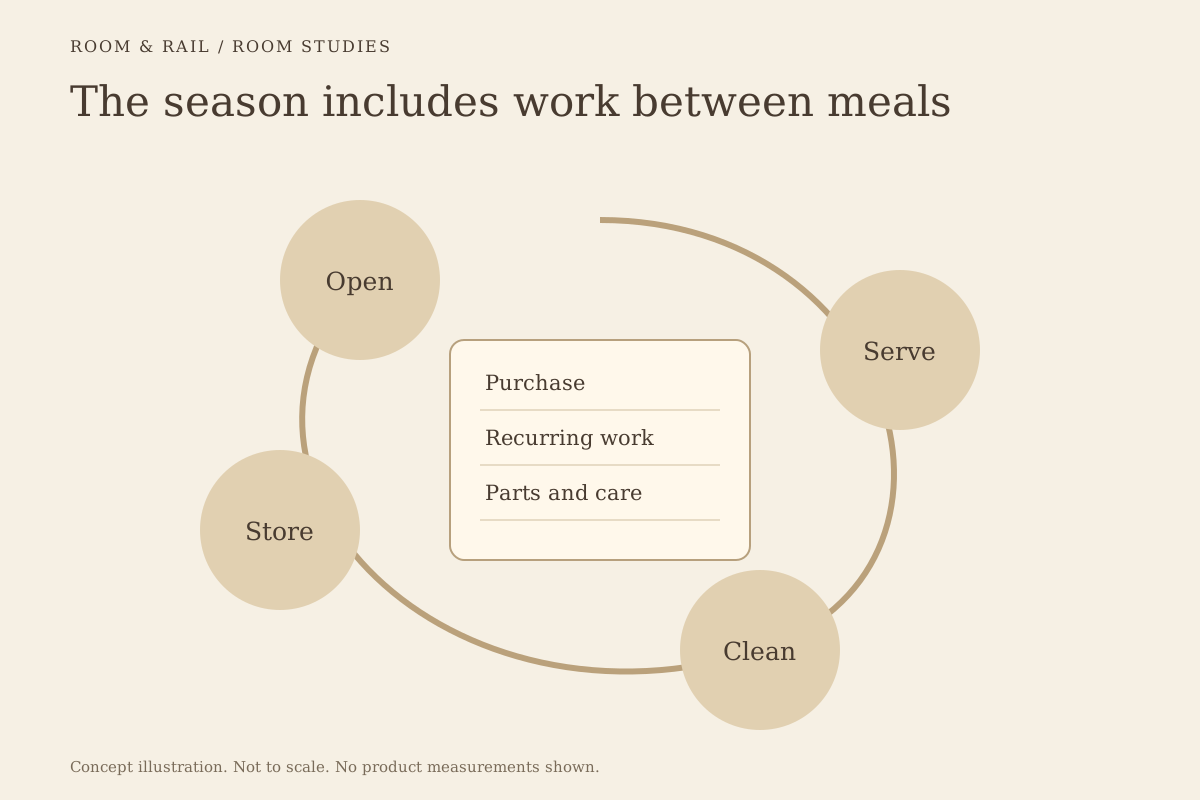
The seasonal-cost guide offers a more transparent approach: include known care, storage, and parts costs without inventing a universal replacement year for all plastic furniture.
Review heat, rain, and handling as separate questions
A recycled-content statement does not establish whether a seat stays comfortable in direct sun or how quickly the complete assembly dries. Those behaviors depend on surface, color, shape, and construction as well as the environment.
The direct-sun article and after-rain guide explain how to compare those conditions without unsupported rankings. Use actual samples or products where the behavior is decisive.
For daily movement, review the individual weight, grip, approved stacking method, and storage route. The stackable-storage guide shows why a material label alone cannot describe the work of closing a patio.
Separate recyclable material from an available recovery route
A polymer may be technically recyclable while the complete furniture item is not accepted by the site's ordinary collection service. Hardware, mixed materials, size, and local processing arrangements can affect what happens at the end of use.
Before making a disposal or recovery plan, identify an actual route for the selected product. A manufacturer take-back service, specialist processor, or accepted local collection arrangement should be confirmed for the location and item, rather than inferred from a resin name.
The environmental value of keeping useful furniture in service also depends on condition and suitability. Repair or reuse should be considered through a real assessment, not used to justify retaining a damaged or inappropriate assembly.
Choose the appearance after the claim is understood
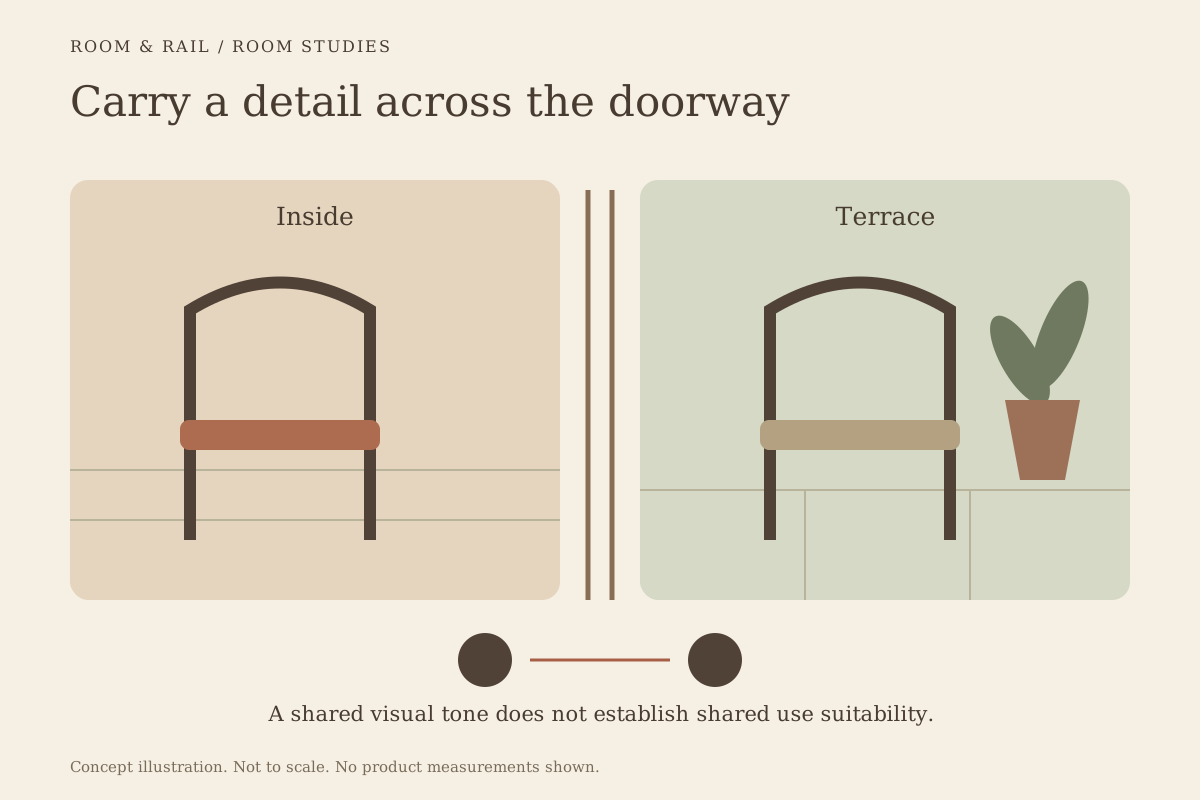
Synthetic wood-like components can connect a patio to an interior palette without behaving like natural wood. The indoor-to-outdoor palette guide helps build that visual relationship honestly.
Compare actual samples and retain the exact selected configuration on the finish board. The material record should explain what the furniture is, while the board explains why its tone and shape belong in the room.
Buy a specific material story you can support
A strong poly-furniture choice has an identifiable construction, clearly scoped environmental evidence, and a practical plan for care, parts, and eventual recovery. It does not depend on treating every synthetic surface as the same recycled material.
Keep those facts with the product as the project develops. The restaurant can then choose furniture for both its useful qualities and its documented material attributes, without making broader claims than the evidence supports.